


 Español
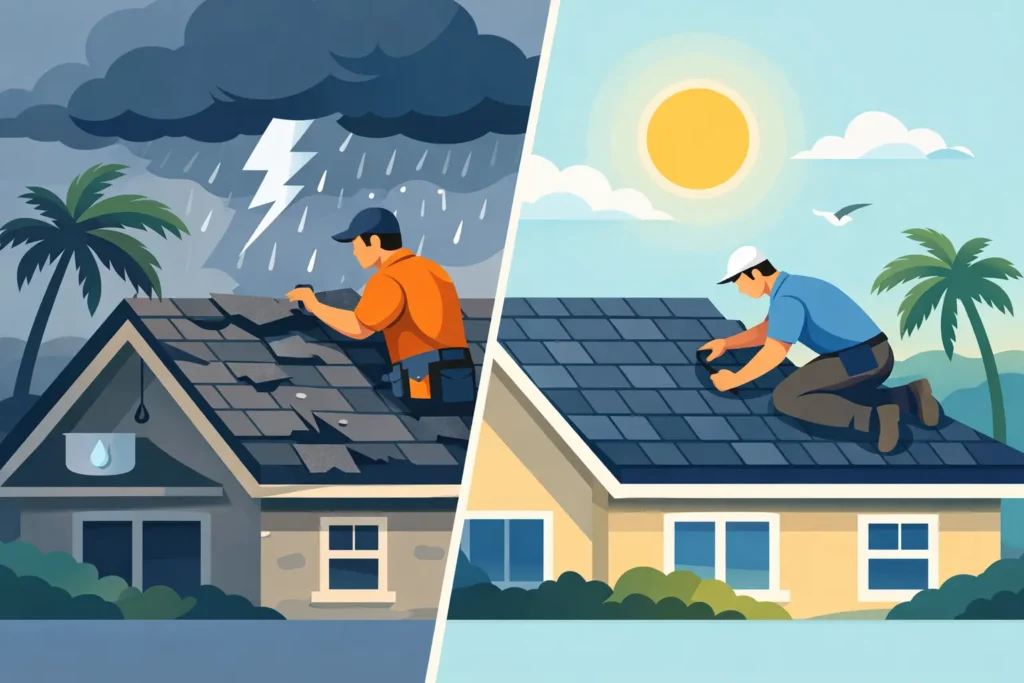
A roof in South Florida can look fine from the driveway and still be one storm away from a major problem. That is why homeowners often ask, when should a roof be replaced? The short answer is this: replace it when repairs stop being the safer, smarter, and more cost-effective option. In Broward, Miami-Dade, and Palm Beach, that point can come sooner than many people expect because heat, humidity, wind, salt air, and hurricane seasons put constant stress on roofing systems.
If your roof is aging, leaking, or showing visible wear, waiting too long can turn a manageable project into interior damage, higher insurance headaches, and emergency costs. The right time to replace a roof is usually before failure, not after it.
When should a roof be replaced instead of repaired?
This is the real decision most homeowners are making. A few missing shingles after a storm do not always mean full replacement. A localized repair can make sense when the roof is relatively young, the damage is limited, and the rest of the system is still in solid condition.
Replacement becomes the better choice when problems are spreading across multiple areas, when leaks keep returning, or when the roof has reached the later part of its expected lifespan. It also makes sense when the roof no longer meets your goals for protection, energy efficiency, or insurability.
In Florida, that last part matters. An older roof may still be standing, but if it is weak in key areas or difficult to insure, its remaining life on paper may not help much in the real world.
Age matters, but condition matters more
Different roofing materials age differently. Asphalt shingle roofs often last around 15 to 25 years in Florida conditions, though intense sun and storm exposure can shorten that range. Tile roofs can last much longer, but the underlayment beneath the tile may fail well before the tile itself. Metal roofs are known for durability, but they still need inspection for fastener issues, corrosion near the coast, and storm-related damage.
That is why age should be treated as a warning light, not the only rule. A 17-year-old roof that has been properly installed and maintained may have useful life left. A 12-year-old roof with poor attic ventilation, repeated repairs, and storm damage may already be a replacement candidate.
If your roof is getting older and you have started noticing stains, lifted materials, granule loss, or recurring repairs, it is time to stop guessing and start planning.
Signs your roof may need replacement soon
Some warning signs are obvious. Others are easy to dismiss until they become expensive. Water stains on ceilings or walls are one of the clearest indicators that your roof system is no longer fully protecting the home. Even a small leak can travel, which means the visible stain is not always directly below the damaged area.
Curling, cracked, or missing shingles are another major clue. If the surface layer is breaking down, your roof becomes more vulnerable to wind uplift and water intrusion. For tile roofs, slipped or broken tiles may point to deeper issues underneath, especially if underlayment is aging.
A sagging roofline is more serious. That can suggest structural moisture damage and should never be ignored. Moss and algae are common in humid climates and are not always a replacement issue by themselves, but widespread growth can trap moisture and hide deterioration.
Higher energy bills can also be part of the story. An older roof with poor ventilation or failing materials can make it harder to control indoor temperatures, which matters in South Florida where cooling costs stay high for much of the year.
Storm damage changes the timeline
A roof that might have lasted another few years can move quickly into replacement territory after a major wind event. South Florida homeowners know that hurricane season tests every weak point. Loose shingles, compromised flashing, punctures from debris, and water intrusion around roof penetrations can all shorten the safe life of the system.
The tricky part is that storm damage is not always dramatic. You may not see a tree through the ceiling. Instead, you might have lifted shingle edges, cracked sealant, or moisture entering around valleys and vents. Those issues can keep worsening long after the storm passes.
That is one reason post-storm inspections matter. If your roof took a hit, the question is not just whether it can be patched. It is whether patching it leaves you with a roof you can trust through the next season.
When should a roof be replaced for insurance reasons?
In Florida, insurance can force the conversation earlier than homeowners expect. Carriers often look closely at roof age, material type, and overall condition. Even if a roof is not actively leaking, an older roof may create problems during underwriting or renewal.
That does not mean every older roof must be replaced immediately. It does mean that age plus visible wear can affect premiums, eligibility, and inspection outcomes. If your insurer has raised concerns or requested documentation, it is smart to address the roof proactively rather than wait until your options narrow.
A new roof can do more than protect the house. It may also support better insurability, stronger wind mitigation potential, and fewer surprises when policy terms change.
The cost of waiting is usually bigger than the cost of planning
Many homeowners delay roof replacement because they want to get every last year out of the current roof. That instinct is understandable. A roof is a major investment, and nobody wants to replace it too early.
But there is a difference between maximizing value and pushing your luck. Waiting too long can lead to soaked insulation, damaged drywall, mold concerns, ruined flooring, and electrical risks. It can also reduce your ability to schedule work on your terms. A planned replacement gives you time to review materials, financing, timelines, and weather windows. An emergency replacement usually does not.
In a market like South Florida, where storms can create sudden demand surges, planning ahead also helps you avoid the rush that follows major weather events.
Replacement can improve more than just protection
A new roof is first about safety, but the benefits often go further. Newer systems can improve ventilation and reflect heat more effectively, which may help reduce cooling strain. They can also strengthen your home’s storm readiness and improve curb appeal if you are thinking about resale.
For many homeowners, the roof is also part of a bigger upgrade strategy. If you are considering impact windows, doors, or solar, it often makes sense to evaluate roofing first. Coordinating these improvements can save time and help ensure your home is working as one stronger, more efficient system.
That is especially valuable when financing options are part of the plan. Homeowners looking at larger resilience upgrades often want a path that protects cash flow while still moving forward before the next storm season.
How to know the timing is right
If you are asking when should a roof be replaced, you are probably already seeing a reason to ask. Maybe it is age. Maybe it is a leak. Maybe it is concern about the next hurricane, your insurance renewal, or the rising cost of waiting.
The right timing usually comes down to three things: current condition, future risk, and whether repair dollars are still buying real peace of mind. If you are spending money again and again without confidence in the result, replacement is often the better investment.
A professional inspection gives you the clearest answer. Not a guess from the ground, and not a hopeful assumption based on how the roof looks from the street. You want a real assessment of the materials, flashing, underlayment, ventilation, and storm exposure, along with honest guidance on whether repair is still practical.
For South Florida homeowners, this is not just a maintenance decision. It is a protection decision. Companies like Hurricane Heroes see this every day – the homes that fare better are usually the ones where owners acted before minor roofing issues became major vulnerabilities.
The best time to replace a roof is before the next leak spreads, before the next storm finds the weak spot, and before an aging system starts costing more than it is worth. If your roof is showing signs of decline, taking action now can protect your home, your budget, and your peace of mind.