


 Español
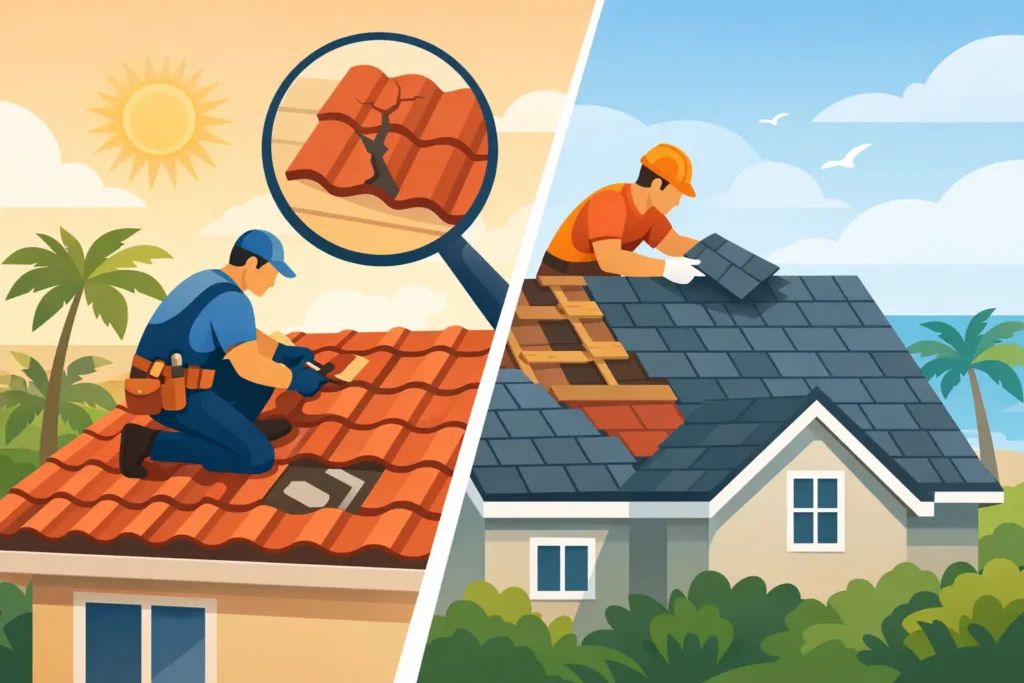
A few missing shingles after a summer storm can feel manageable. A ceiling stain that keeps growing, higher cooling bills, or a roof that is already pushing 20 years old is a different conversation. When homeowners start weighing roof repair vs replacement, the real question is not just what costs less today. It is what protects your home best through the next hurricane season.
In South Florida, roofing decisions carry more weight than they do in many other parts of the country. Heat, heavy rain, salt air, wind uplift, and insurance pressure all change the math. A quick repair can absolutely be the right move in some cases, but there are also times when patching a failing roof only delays a larger and more expensive problem.
Roof repair vs replacement: what is the real difference?
Roof repair means fixing a specific issue while keeping most of the existing roof system in place. That might include replacing damaged shingles, sealing flashing, repairing a leak around a vent, or addressing a small section damaged by wind or fallen debris. Repairs are usually faster, less expensive upfront, and useful when the roof still has solid years left.
Roof replacement means removing the existing roofing materials and installing a new roof system. Depending on the home and the condition of the decking, this can involve much more than just fresh shingles or tile. It is a larger project, but it gives you the chance to bring the roof up to current standards, improve storm resistance, and reset the lifespan of one of the most important systems protecting your property.
The best choice depends on the condition of the roof as a whole, not just the most visible problem.
When a roof repair makes sense
A repair is often the right call when the damage is limited and the rest of the roof is still in strong condition. If your roof is relatively new and a storm peeled back a small section, targeted work may restore protection without putting you through a full replacement project.
Repairs also make sense when the issue is isolated. A minor flashing failure around a chimney or vent, a handful of cracked tiles, or a leak caused by one problem area can often be corrected without disturbing the entire roof. In these situations, paying for a full replacement would be more than the home actually needs.
Timing matters too. If you are dealing with sudden damage during storm season, a repair can help secure the home quickly while you assess next steps. The key is making sure it is a real solution, not just a temporary patch that leaves bigger weaknesses untouched.
When roof replacement is the smarter investment
There comes a point when repairs stop being cost-effective. If your roof has recurring leaks, visible sagging, widespread shingle loss, brittle materials, or signs of aging across multiple sections, replacement is usually the better long-term move.
This is especially true in South Florida, where a roof is not just keeping out rain. It is standing up to hurricane-force winds, intense UV exposure, and moisture that can turn a small weakness into interior damage fast. An older roof may still look acceptable from the street while failing in ways that affect insurance eligibility, energy performance, and storm readiness.
Replacement can also make more financial sense if you are paying for repair after repair. Homeowners sometimes spend thousands over a few years trying to extend the life of a roof that is already near the end. That money often does not add much value, and it does not deliver the confidence of a new system designed for current code requirements.
The biggest factors to consider
Roof age
Age is one of the first things to look at. Different roofing materials have different life expectancies, but South Florida weather can shorten the useful lifespan of any system. If your roof is nearing the end of its expected service life, even a modest issue may be a sign that replacement deserves serious consideration.
A newer roof with isolated damage usually points toward repair. An aging roof with widespread wear points toward replacement.
Extent of damage
A small leak does not always mean a small problem. Water can travel. By the time you see staining inside, the damage may have spread under the roofing material or into the decking. On the other hand, one damaged area after a wind event may be straightforward to fix if the rest of the roof remains sound.
The decision should be based on a full inspection, not guesswork from inside the attic or a quick glance from the driveway.
Cost now versus cost later
A repair almost always wins on initial price. That does not mean it is the cheaper decision over time. If the roof is likely to need repeated work, or if another major issue is close behind, replacement may actually protect your budget better.
This is where homeowners can get stuck. It is natural to lean toward the smaller invoice. But if that smaller invoice is only buying a short delay, it may not be serving your home well.
Insurance and code considerations
Florida homeowners know roofing decisions are tied closely to insurance. Carriers may look closely at roof age, material condition, and wind mitigation features. In some cases, an older roof can affect premiums, renewals, or inspection outcomes.
A replacement may create opportunities for better compliance with current standards and potentially improve your position when discussing coverage. A repair may preserve the roof for now, but it may not address underlying concerns an insurer could still flag later.
Energy efficiency and home value
An older roof can contribute to heat gain and make your HVAC system work harder. A replacement gives you a chance to improve ventilation and overall performance, which matters in a hot climate like ours. It can also strengthen resale appeal. Buyers in Broward, Miami-Dade, and Palm Beach counties pay attention to roof age because they understand what storm exposure means.
Why South Florida homeowners need a stricter standard
In other regions, a homeowner might squeeze a few more years out of a borderline roof without much risk. Here, that approach can backfire. One bad storm can turn a manageable issue into structural damage, interior water intrusion, mold concerns, and a much larger insurance claim.
That is why roof repair vs replacement should be evaluated through a South Florida lens. The question is not simply whether the roof can survive another season. It is whether it can protect your family, your investment, and your peace of mind when conditions get rough.
This is also why quality installation matters as much as material choice. A new roof only delivers value if it is installed correctly and designed for local conditions.
Signs you should stop patching and start planning
If you are seeing the same leak return, if repairs are popping up in different areas, or if your roof has visible wear across large sections, it is time to think bigger. Curled or missing shingles, cracked tiles, granule loss, soft spots, water stains in multiple rooms, and rising concern from your insurance company are all signals that repairs may be losing their value.
Homeowners also tend to wait too long when the roof is not actively leaking every day. That is understandable. But waiting for a major failure usually means less control over timing, more stress, and fewer options.
A practical way to make the right decision
Start with a professional inspection that looks at the entire roofing system, not just the symptom you noticed. You want a clear picture of current damage, remaining lifespan, storm-readiness, and whether the roof is likely to keep demanding money in the near future.
From there, weigh the decision based on protection, not just price. Ask how long a repair is expected to last. Ask whether the issue is isolated or part of broader wear. Ask how the roof’s age may affect insurance and future resale. If replacement is recommended, ask what benefits come with modern materials and installation standards.
For many local homeowners, financing also changes the conversation. A replacement that seemed out of reach can become practical when there are payment options that reduce the upfront burden. That makes it easier to choose the solution that protects the home long-term instead of settling for a short-term fix.
At Hurricane Heroes, we see this decision every day across South Florida homes. The right answer is not always replacement, and it is not always repair. It is the option that leaves your home safer, stronger, and better prepared for the next storm.
If your roof is giving you reasons to worry, trust that instinct. A careful decision now can save you money, stress, and damage later, and that is the kind of protection every Florida homeowner deserves.