


 Español
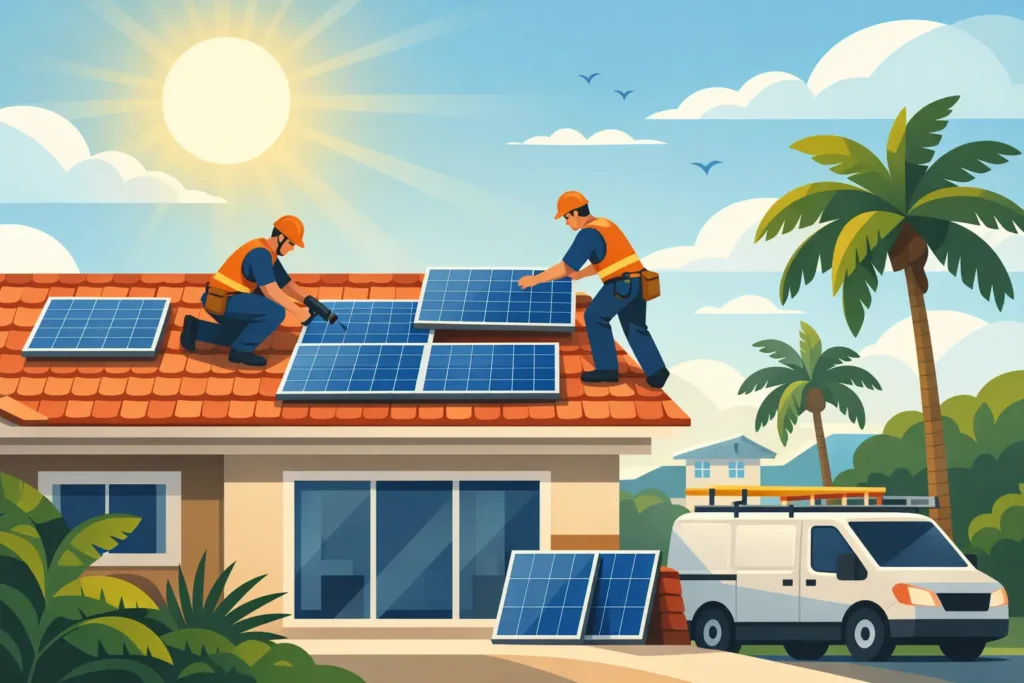
A South Florida roof does more than keep rain out. It takes intense sun, summer heat, wind-driven rain, and the pressure of hurricane season year after year. Solar panel installation can put that sunlight to work, but the best projects start with a clear look at the roof beneath the panels, the home’s energy use, and the local requirements that protect your investment.
For homeowners in Broward, Miami-Dade, and Palm Beach counties, solar is not just about lower electric bills. It can be part of a smarter long-term property plan – especially when paired with a new roof, impact-resistant windows and doors, or other upgrades that help a home perform better when conditions get tough.
Start With the Roof, Not the Panels
Solar panels are built to last for decades. That is why the roof should be ready to last with them. Installing a system on an aging, damaged, or soon-to-be-replaced roof can create avoidable expense later. If roofing work is needed after the panels are installed, the system may need to be removed and reinstalled before repairs can happen.
A professional evaluation should look at roof age, material, slope, drainage, existing leaks, and the condition of the structure. It should also consider shading from trees, neighboring buildings, chimneys, vents, and equipment. South Florida gets abundant sun, but a roof with heavy afternoon shade will not produce the same results as an open roof with clear exposure.
For many homeowners, coordinating roof replacement and solar panel installation in one project is the practical move. It helps ensure the roofing system, flashing, mounting points, and solar layout are planned together instead of treated as separate jobs. That can simplify scheduling and give you more confidence in the finished work.
What a Solar Panel Installation Should Include
A solar project is more than panels on a roof. A properly planned system includes engineering, permitting, electrical work, utility coordination, and final inspection. Each piece matters because the system must perform reliably and meet the standards that apply to your property.
The process usually begins with a site assessment and a review of recent utility bills. Your installer uses that information to estimate energy needs and recommend a system size. A larger system may produce more power, but it is not automatically the right choice. Roof space, shading, household usage patterns, electrical capacity, budget, and local utility rules all affect the best design.
After design approval, the project moves into engineering and permits. In South Florida, wind considerations are not an afterthought. The mounting system and attachment plan must be designed for the property and applicable building requirements. Quality installation protects the roof, supports the panels properly, and gives homeowners a clear record of what was installed.
Once permits are approved, the installation itself may move quickly. The full timeline can still vary based on permit review, equipment availability, weather, inspections, and utility approval to connect the system. A reliable contractor should explain the expected steps upfront rather than promising a date that does not account for the local approval process.
Savings Depend on Your Home and Your Habits
Solar can reduce the amount of electricity you buy from the grid, which can lower monthly utility costs. The exact savings depend on how much electricity your home uses, when it uses it, how much the system produces, and the utility’s current rates and policies.
A family running air conditioning throughout the day may use solar power differently than a seasonal resident whose home is empty for months at a time. Pool pumps, electric vehicles, appliances, insulation, thermostat settings, and older HVAC equipment can all change the picture. A careful proposal should use real household information, not a one-size-fits-all savings promise.
It also helps to understand that solar production changes throughout the day and year. Panels generate electricity when sunlight is available. They do not create power at night, and production can drop during storms or heavy cloud cover. A grid-connected solar system can still deliver meaningful value, but it is not the same thing as backup power.
Do You Need a Battery?
Not every solar project needs battery storage. If your main goal is reducing utility costs, a standard grid-tied system may be the better fit. If keeping selected appliances running during an outage is a priority, battery storage may be worth considering.
The trade-off is cost and scope. Batteries can support critical loads such as refrigeration, lighting, internet equipment, and certain medical or security needs, depending on the system design. They are generally not intended to run every high-demand appliance in the home indefinitely. Air conditioning, electric water heaters, pool equipment, and large cooking appliances can require more capacity than many homeowners expect.
For hurricane season, the right question is not simply, “Do I want a battery?” It is, “What do I need powered, for how long, and what budget makes sense for that level of backup?” A clear answer helps create a system that matches real life.
Hurricane Readiness Means Details Matter
South Florida homeowners are right to ask how solar panels hold up in high winds. The answer depends on the system design, installation quality, roof condition, and compliance with local requirements. Panels, rails, attachments, and flashing must work together as one secure assembly.
The installation should not compromise the roof’s weather protection. Proper flashing and sealing at attachment points are essential, as is careful attention to layout around roof valleys, ridges, vents, and drainage paths. This is one reason choosing an experienced local team matters. A company that understands both roofing and exterior protection can see the full picture instead of focusing only on the panels.
Before hurricane season, keep documentation for your roof and solar system in a safe place. Know who installed the system, where the equipment is located, and how to shut it down if instructed by emergency officials or the manufacturer. After a major storm, avoid climbing onto the roof. Have a qualified professional inspect visible damage, loose equipment, exposed wiring, or signs of water intrusion.
Financing Should Be Easy to Understand
The upfront cost of solar can be a major decision point, even when the long-term value is strong. Homeowners may choose to pay cash, use financing, or explore eligible property-assessed financing options. The right path depends on your financial goals, ownership timeline, and comfort with the repayment terms.
Do not make a decision based only on a low monthly payment. Ask how long the payment lasts, whether the obligation is tied to the property, what happens if you sell, and how the project affects your total cost over time. You should also confirm which incentives, tax considerations, or utility programs may apply to your situation. Rules can change, so current information matters.
A trustworthy contractor will explain the available options in plain language and give you room to decide. At Hurricane Heroes, the goal is to help homeowners weigh protection, performance, and affordability without making the process harder than it needs to be.
Questions to Ask Before You Sign
A solar proposal should leave you feeling informed, not rushed. Ask whether your roof is ready for the system, what energy production estimate is being used, and what assumptions support the projected savings. Confirm who handles permits, inspections, utility paperwork, and any required coordination with your HOA.
You should also ask about the equipment warranty, workmanship warranty, monitoring, roof penetrations, and the process for service if something needs attention after installation. If the project includes a roof replacement, make sure the scope clearly explains how the roof and solar work are coordinated.
The best solar panel installation is not the one with the biggest promise on paper. It is the one designed for your roof, your energy use, and the realities of living in South Florida. When the planning is done right, solar becomes one more way your home can work harder for your family long after the project is complete.