


 Español
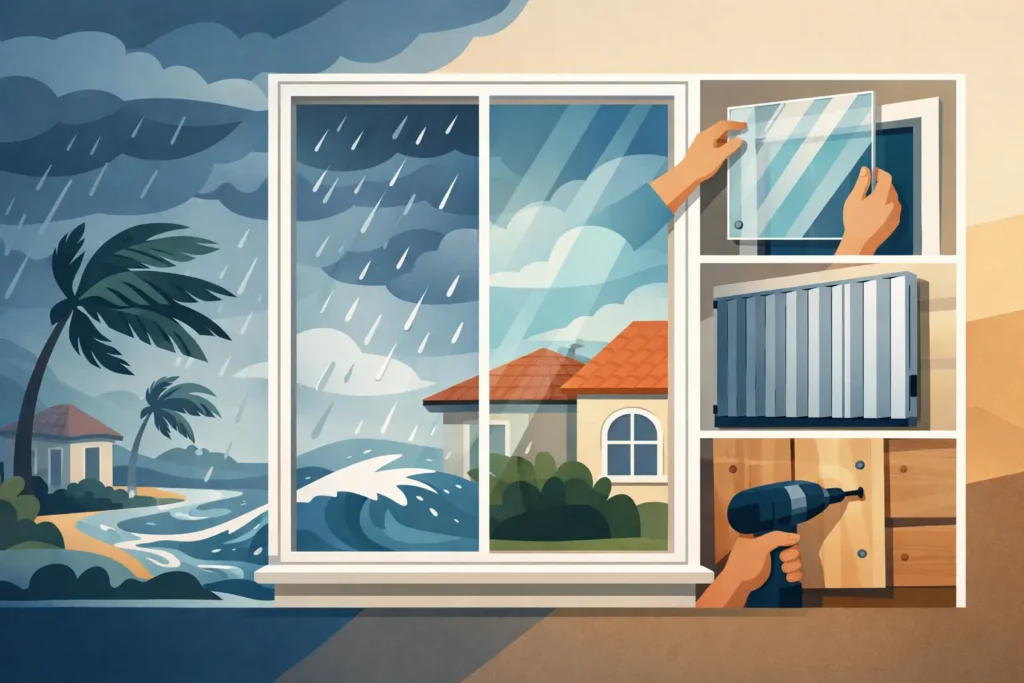
A window is often the first weak point when hurricane-force winds reach your neighborhood. Once wind-driven debris breaks an opening, pressure can build inside the home, putting the roof, walls, and everyone inside at greater risk. Learning how to storm proof windows is not just about preparing for the next storm warning. It is a practical investment in your home’s safety, insurance profile, energy efficiency, and long-term value.
For homeowners in Broward, Miami-Dade, and Palm Beach counties, the right solution depends on your home’s age, window condition, budget, and whether you want a temporary layer of protection or a permanent upgrade. The goal is the same: create a tested, properly installed barrier between your home and the storm.
How to Storm Proof Windows Before Hurricane Season
Storm protection works best when it is planned well before a named storm is approaching. Installers get booked, materials become harder to find, and rushed decisions can leave gaps where they matter most. Start by walking around your property and looking at every window, sliding glass door, sidelights, and other glazed opening.
Look for cracked panes, loose frames, deteriorated caulk, water staining, damaged screens, or windows that are difficult to lock. These issues do not always mean the window will fail in a storm, but they are clear signs that the opening needs professional attention. Older single-pane windows and windows with aging aluminum frames can be especially vulnerable in South Florida homes.
Your first priority should be protecting the largest and most exposed openings. Sliding glass doors, picture windows, second-story windows, and windows facing open water or wide, unobstructed areas often receive the strongest wind pressure and debris impact. A qualified contractor can assess the opening, the existing wall condition, and the wind-load requirements that apply to your property.
Choose a permanent or deployable solution
There are two main ways to protect windows: permanent impact-rated replacement windows or deployable systems such as hurricane shutters and panels. Neither is automatically right for every property.
Impact-resistant windows use laminated glass designed to remain in place even if the outer layer cracks after an impact. The window frame, glass, and installation system must work together to meet the required rating. Their biggest advantage is always-on protection. You do not need to climb a ladder or rush home to close shutters when a storm track changes. They can also reduce outside noise, filter some UV exposure, and improve day-to-day security.
Hurricane shutters can be a strong choice when existing windows are in good condition or when a homeowner wants to manage the upfront cost of a full window replacement. Options include accordion shutters, roll-down shutters, Bahama shutters, colonial shutters, and removable panels. The trade-off is preparation. Someone must deploy them correctly before the storm, and the hardware must be maintained so it works when needed.
Plywood is sometimes used as a last-minute emergency measure, but it should not be mistaken for a long-term hurricane protection system. Improper thickness, weak fasteners, poor coverage, and incorrect spacing can make it unreliable. It may also fail to meet local code or insurance mitigation requirements. If plywood is your only current option, use it as a temporary bridge while you plan a tested solution.
Why Impact Windows Are a Strong Long-Term Upgrade
For many South Florida homeowners, impact windows are the most complete answer to storm-proofing. They protect the opening every day, not only when shutters are closed. That matters if you travel, own a rental property, have mobility limitations, or simply do not want storm preparation to depend on your ability to install panels under pressure.
The glass is built with a durable interlayer between panes. In an impact event, the glass may crack, but the interlayer helps hold it together and keeps the opening protected from wind and debris. This is very different from standard glass, which can shatter and leave the home exposed.
Still, impact glass alone is not the whole story. A premium product can underperform if it is measured incorrectly, attached with the wrong fasteners, or installed into a compromised opening. Proper flashing, sealant, anchoring, and finishing are part of the protection system. This is why homeowners should look beyond the window itself and ask who will install it, what approvals apply, and how the work will be inspected.
A professionally installed impact window upgrade may also support insurance savings through wind mitigation credits, depending on your insurer and policy. Savings vary, so it is wise to ask your insurance agent what documentation is required before assuming a specific discount. The broader value is straightforward: stronger windows can help reduce storm damage risk while improving comfort and curb appeal year-round.
Do Not Overlook Frames, Locks, and Seals
A storm-proof window is only as strong as its surrounding components. Frames must be compatible with the glass and rated for the wind pressures at your home. Locks need to engage fully, and the sash should close tightly without excessive movement. If you can see daylight around a closed window or feel air entering on a windy day, schedule an evaluation.
Caulk and weatherstripping are also worth inspecting before hurricane season. They do not turn a standard window into an impact-rated product, but they can help limit water intrusion and improve energy performance. Remove failing sealant, address damaged trim, and correct drainage issues around the opening. Water that enters around a frame can damage interior finishes and create costly problems even when the glass remains intact.
For shutter systems, check the tracks, bolts, anchors, and locking mechanisms at least once a year. Clear leaves, sand, and paint buildup from tracks. Practice closing the system before the first storm watch of the season. If panels are stored away, label each panel by opening and keep the required fasteners in one secure, accessible location.
Avoid These Common Window Protection Mistakes
Homeowners often make well-intentioned choices that create a false sense of security. Avoid these four problems:
- Applying window film and assuming it provides hurricane impact protection. Most film products cannot replace a tested impact-rated window system.
- Using tape in an X pattern on glass. Tape does not stop debris from breaking the pane and can make cleanup more difficult.
- Waiting until a storm is already approaching to order shutters or replacement windows. Availability and installation timelines can change quickly.
- Covering only the front-facing windows. Hurricanes can shift direction, and vulnerable side or rear openings still need protection.
Another mistake is choosing a product based on appearance or price alone. A shutter or window should be appropriate for your opening size, exposure, local requirements, and installation surface. A lower initial price can become expensive if the system needs frequent repair, lacks proper documentation, or does not provide the level of protection your home needs.
Plan the Project Around Your Budget and Timeline
A whole-home impact window project is a significant upgrade, but homeowners do not always need to complete every opening at once. A staged plan can begin with the most exposed windows and doors, then move through the rest of the property as budget allows. This approach is especially useful for larger homes, investment properties, or homes that also need roofing work.
If you are replacing a roof, upgrading exterior doors, or considering solar, coordinate the work whenever possible. A complete exterior protection plan can reduce scheduling conflicts and help ensure the finished home performs as one system. For example, an upgraded roof and protected openings work together to defend the building envelope during high winds and heavy rain.
Financing may also make a permanent upgrade more achievable. Some Florida homeowners explore PACE-related financing for qualifying improvements, though terms, eligibility, repayment obligations, and availability should always be reviewed carefully. The right financing decision should fit your household budget, not just reduce the initial payment.
At Hurricane Heroes, the focus is on helping South Florida homeowners evaluate impact windows, doors, roofing, and solar improvements as connected investments in a safer, more efficient home. A clear inspection and written scope can make it easier to compare options without guessing what is included.
Get Protection That Is Ready Before the Forecast Changes
The best time to storm-proof your windows is when the sky is clear and you have time to make a careful decision. Start with an assessment of your openings, choose tested protection designed for your home, and make sure installation is handled with the same care as the product itself. When the next storm forms offshore, you should be able to focus on your family and your plan, not wonder whether your windows will hold.