


 Español
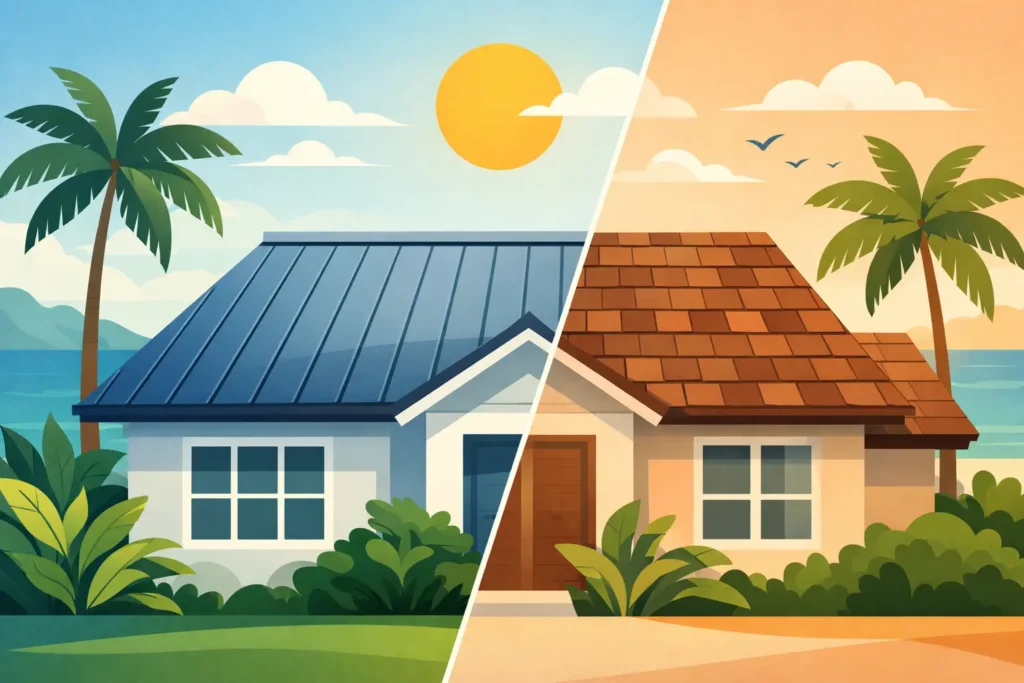
If you own a home in South Florida, the metal roof vs shingles question is not really about looks alone. It is about how your roof handles hurricane season, brutal sun, rising insurance pressure, and the real cost of replacing it again sooner than you hoped.
In Broward, Miami-Dade, and Palm Beach counties, roofing decisions carry more weight than they do in milder parts of the country. A roof here has to stand up to wind, salt air, humidity, heavy rain, and long stretches of heat. That means the right choice depends on your budget, how long you plan to stay in the home, and how much value you place on storm protection and long-term savings.
Metal roof vs shingles: what matters most in Florida
For many homeowners, asphalt shingles win on upfront cost. Metal usually wins on lifespan, durability, and energy performance. That does not mean one option is always better. It means each one solves a different problem.
If your top concern is keeping the project affordable right now, shingles often make sense. If your goal is to invest once and get stronger protection over the long haul, metal deserves a serious look. In South Florida, that trade-off matters more because the roof takes a beating year after year.
Storm protection and wind resistance
When people compare metal roof vs shingles, storm performance is often the deciding factor. That is especially true near the coast, where high winds and wind-driven rain are part of life.
A properly installed metal roof is known for strong wind resistance and a tighter, more durable surface. Many metal systems are engineered to handle severe weather and can perform very well during hurricane conditions when installed to current code and manufacturer standards. Metal also does not absorb water the way some other materials can, which helps during long periods of heavy rain.
Shingles can still be a solid option, especially newer architectural shingles rated for higher winds. But shingles are more vulnerable to lifting, creasing, and losing granules over time. Even when they hold up well overall, aging shingles may become the weaker link during a major storm. In Florida, age matters. A shingle roof that looked fine two years ago may not offer the same peace of mind heading into the next hurricane season.
That is why installation matters just as much as material. A high-quality roof system, proper underlayment, correct fastening, and code-compliant workmanship all play a major role in how the roof performs when the weather turns.
Cost upfront vs cost over time
Shingles are usually easier on the budget at the start. For homeowners replacing a roof due to age, insurance requirements, or a recent leak, that lower initial cost can be the reason the project gets done now instead of later.
Metal costs more upfront, sometimes significantly more depending on the profile, thickness, coating, and complexity of the roof. That can be a hurdle. But the long-term math often looks different. A metal roof typically lasts much longer than shingles, which may reduce the chance of paying for another full replacement in the same homeownership window.
There is also the maintenance side. Shingle roofs may need more repairs as they age, especially after strong storms or years of exposure to Florida heat. Metal roofs are not maintenance-free, but they generally hold up better over time when installed correctly.
So the real financial question is not just what you pay today. It is what you are likely to pay over 20 to 40 years, including repairs, replacement timing, and possible energy savings.
Lifespan and long-term value
A shingle roof can serve a home well, but in South Florida it may age faster than homeowners expect. Heat, UV exposure, humidity, and storm activity can shorten its practical life compared with cooler climates.
Metal roofs usually offer a much longer service life. That longer lifespan can be a major advantage if you plan to stay in your home, keep the property as a rental, or want to improve resale appeal with an upgrade buyers recognize as durable and premium.
This is where long-term property value comes in. Buyers in Florida understand roof age. They ask about it early, and so do insurers. A newer metal roof can be a strong selling point because it signals durability, lower future replacement risk, and better preparedness for severe weather.
Energy efficiency in South Florida heat
The sun is not a small factor here. A roof absorbs heat all day, and that affects how hard your AC has to work.
Metal roofing often reflects more solar heat than traditional shingles, especially when it has reflective coatings designed for energy performance. That can help reduce attic heat and lower cooling demand. On a South Florida home, that is not a minor perk. Over time, better energy performance can support monthly savings and a more comfortable indoor environment.
Shingles, especially darker ones, tend to absorb more heat. There are energy-efficient shingle options available, and proper attic ventilation can make a big difference, but shingles generally do not match metal for heat reflection.
If energy bills are already a frustration, metal may offer an advantage beyond storm strength alone. For homeowners pairing roofing upgrades with impact windows, doors, or solar improvements, the efficiency benefits become even more meaningful.
Appearance and neighborhood fit
Some homeowners worry that metal roofing will make the house look too industrial. That used to be a more common concern, but modern metal roofing comes in styles that work well with residential homes, including profiles that look clean, finished, and high-end.
Shingles remain the more familiar look in many neighborhoods. They blend in easily and come in a wide range of colors and styles. If you want a traditional appearance without drawing much attention, shingles may feel like the safer visual choice.
This part is personal, but it is also practical. The best roof should protect the home and fit the property well. A roof that looks right on a coastal modern home may not be the same one that fits a more traditional suburban house.
Insurance, codes, and peace of mind
In Florida, roofing is tied to more than shelter. It can affect inspections, code compliance, and insurance conversations.
A stronger, newer roofing system may help support wind mitigation benefits, though savings depend on the roof design, installation details, and your insurer. Metal roofs can be attractive in that conversation because of their durability and wind performance. Shingle roofs can also qualify for benefits when they meet current standards, but age and condition often become issues sooner.
This is one reason many homeowners choose to replace the roof before it becomes an emergency. Waiting too long can limit your options, raise stress, and create more problems during storm season.
Which roof is right for your home?
Choose shingles if your main priority is lower upfront cost, you need a practical replacement soon, or you plan to sell before the longer-term savings of metal really pay off. A quality shingle roof installed to current Florida standards can still be a smart, protective choice.
Choose metal if you want stronger long-term value, better durability in harsh weather, improved energy performance, and a roof that is built with Florida conditions in mind. The higher initial investment can make sense for homeowners who want fewer replacement cycles and more confidence going into hurricane season.
For many South Florida households, the answer comes down to timeline and risk tolerance. If you are thinking short term, shingles often work. If you are thinking about the next few decades, metal becomes harder to ignore.
A roof is one of the biggest protective systems your home has. That is why this decision deserves more than a quick price comparison. It deserves a look at how you live, what your house faces each year, and how much future stress you want to avoid. If you are weighing options now, Hurricane Heroes can help you compare roofing choices based on protection, budget, and long-term value so you can move forward with confidence before the next storm puts your roof to the test.