


 Español
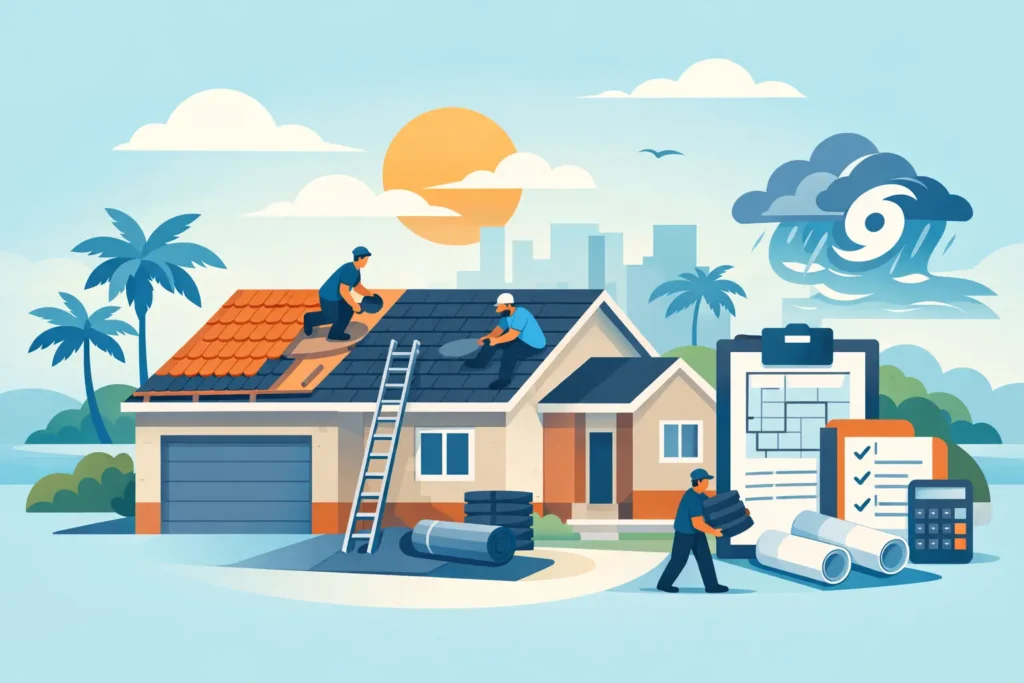
A roof rarely fails at a convenient time. In South Florida, a small ceiling stain, missing shingle, or aging tile roof can quickly become a bigger concern when hurricane season is approaching. This roof replacement planning guide helps homeowners move from uncertainty to a clear plan – one that protects the home, respects the budget, and supports long-term value.
A replacement roof is not simply a new exterior finish. It is a protective system that must handle intense sun, wind-driven rain, humidity, and the demands of local building requirements. Planning carefully before work begins gives you more control over the materials, timing, contractor selection, and financing choices that shape the finished project.
Start With the Condition of Your Current Roof
The first question is not always, “Do I need a new roof?” It is, “What is my roof telling me?” Age matters, but visible condition and recent storm history matter just as much. A roof may look acceptable from the street while showing deteriorated underlayment, cracked flashing, soft decking, or active leaks beneath the surface.
Schedule a professional roof inspection if you have recurring leaks, loose or broken tiles, curling or missing shingles, water stains on ceilings, granules collecting in gutters, or a roof that is nearing the end of its expected service life. For many Florida homes, insurance requirements and the roof’s documented age can also influence the urgency of replacement.
Ask for a clear assessment that separates repairable issues from conditions that point to a full replacement. A targeted repair can be the right financial decision when the roof is otherwise sound. But repeated patching on an aging roof may only delay a larger expense while leaving the home vulnerable during the next major storm.
Build Your Roof Replacement Plan Around Protection
South Florida roof planning should begin with wind and water, not color selection. The visible roofing material is important, but the complete system includes the roof deck, underlayment, flashing, fasteners, ventilation, and the way every component is installed together.
Understand the material trade-offs
Asphalt shingles, concrete or clay tile, metal roofing, and other approved systems each have different costs, appearances, weights, maintenance needs, and expected lifespans. The best choice depends on your home’s design, structural considerations, neighborhood requirements, budget, and protection goals.
Shingles are often a practical option for homeowners who want a broad range of styles and manageable upfront cost. Tile can deliver a classic South Florida look and long service potential, but its weight and individual component maintenance should be considered. Metal roofing may appeal to homeowners looking for durability and strong weather performance, although it can cost more initially and requires experienced installation details.
Do not choose based on a single feature or a neighbor’s roof alone. Ask which materials are appropriate for your property and how the proposed system addresses local wind requirements. A lower initial price may not represent the best value if it leaves out key protective components or creates higher maintenance costs later.
Do not overlook underlayment and flashing
Many serious roof leaks begin where materials meet: around chimneys, vents, skylights, valleys, walls, and pipe penetrations. High-quality underlayment and correctly installed flashing provide critical backup protection when wind-driven rain gets beneath the outer roof covering.
This is where workmanship makes a major difference. During proposal review, ask what underlayment will be used, how flashing will be addressed, whether damaged decking is included or priced separately, and how the contractor handles unexpected conditions uncovered during tear-off. Specific answers are better than vague assurances.
Set a Realistic Budget Before You Sign
A roof replacement quote should make it easier to make a decision, not harder. The final investment can vary significantly based on roof size, pitch, material, removal of existing roofing, deck repairs, access, permits, and design complexity. Homes with multiple levels, steep slopes, solar equipment, or extensive penetrations often require more labor and detail work.
Review proposals line by line. You want to know what is included in the stated price, what could create an additional charge, and who is responsible for permits, debris removal, site protection, and final cleanup. A detailed scope helps prevent unpleasant surprises after the project starts.
When comparing estimates, look beyond the bottom number. Compare the material specifications, warranty terms, installation scope, projected timeline, and contractor responsiveness. If one price is far below the others, find out why. It may reflect a different material level, missing scope items, or a plan that does not account for the realities of your roof.
Financing can also affect how you plan. Some South Florida property owners explore PACE-related financing for qualifying improvements, while others use savings, home equity, or traditional financing. Each option has different payment structures and eligibility considerations. Review the full terms, including how any assessment may affect property taxes or future sale plans, before moving forward.
Choose the Right Time for the Project
There is no perfect weather guarantee in South Florida, but there is a better time to plan than after a storm is already on the radar. Waiting until leaks worsen or hurricane season is underway can reduce scheduling flexibility and create more stress for your household.
Start the process early if your roof is aging, your insurer has raised concerns, or you have seen signs of deterioration. Early planning gives you time to inspect the roof, compare options, secure approvals, and schedule work around family needs. It also gives your contractor time to order materials that may have longer lead times.
Once the work is scheduled, prepare for a temporary disruption. Roof replacement is noisy, and the work area needs to remain clear for crews, deliveries, and debris removal. Move vehicles away from the driveway, secure outdoor furniture and fragile wall decorations, and make plans for pets or anyone who works from home. A professional crew should explain the schedule and protect the property, but clear preparation helps the project run smoothly.
How to Select a Roofing Contractor With Confidence
A new roof should deliver peace of mind for years, so contractor selection deserves careful attention. Florida homeowners should verify licensing, insurance, local experience, and a record of completing projects with appropriate permits and inspections. Ask who will perform the installation, who will supervise the job, and how questions will be handled while work is underway.
A dependable contractor should be comfortable explaining the project in plain language. You should understand the proposed roofing system, the anticipated start and completion window, the payment schedule, and the warranty coverage for both materials and workmanship.
Before making a final choice, ask these practical questions:
- What roofing system and underlayment are included in the proposal?
- How will you protect landscaping, driveways, and outdoor areas during tear-off?
- What happens if damaged decking or other hidden issues are found?
- Who handles permits, inspections, cleanup, and final documentation?
- What workmanship warranty do you provide, and what maintenance could affect it?
Pay attention to communication from the first conversation. A contractor who is hard to reach before the contract is signed is unlikely to become more responsive once the work begins. Homeowners deserve clear expectations, timely updates, and a crew that treats the property with respect.
Coordinate Roofing With Other Home Protection Upgrades
A roof replacement can be an ideal time to look at the larger protection plan for your home. If you are considering impact-resistant windows and doors, solar panels, attic ventilation improvements, or exterior upgrades, coordinating the timing may prevent duplicated work and help you make smarter decisions about the home as a complete system.
For example, homeowners planning solar should discuss panel removal, replacement, or future installation before roofing work begins. Those upgrading windows and doors can also evaluate how roof, openings, and insurance mitigation features work together to strengthen the property. The right project sequence depends on your budget and priorities, but planning them together avoids treating every improvement as an isolated emergency.
Hurricane Heroes helps South Florida homeowners evaluate roofing alongside impact protection and solar options, so protection goals, project timing, and financing conversations can stay organized under one trusted local team.
A Stronger Roof Starts With an Earlier Decision
The best time to make a roof replacement plan is while you still have choices. Get a professional evaluation, ask detailed questions, and select a system built for the conditions your South Florida home faces. A well-planned roof does more than improve curb appeal – it helps protect the people, property, and peace of mind that matter most.