


 Español
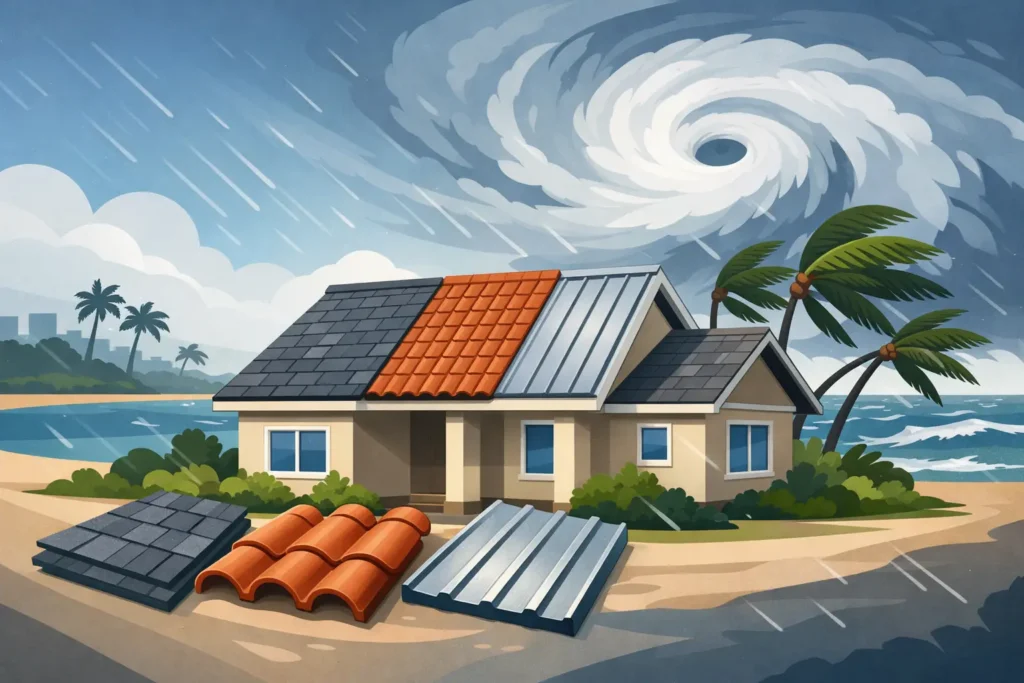
If you live in South Florida, your roof is not just a finish on top of the house. It is your first shield when wind picks up, rain pushes sideways, and flying debris starts testing every weak point. That is why choosing the best hurricane roof materials matters so much for homeowners in Broward, Miami-Dade, and Palm Beach. The right roof can help protect your family, reduce damage risk, and support better long-term value for your home.
A lot of homeowners start this search thinking there must be one perfect material. Usually, there is not. The best choice depends on your home’s structure, your budget, your insurance goals, the look you want, and how long you plan to stay in the property. In South Florida, storm performance comes first, but cost, maintenance, weight, and energy efficiency still matter.
What makes a roof material hurricane-ready?
When people talk about storm protection, they often focus on the roof covering alone. That is only part of the story. A hurricane-resistant roof system depends on how the material performs under high wind, how well it resists impact, how securely it is installed, and whether the entire assembly meets current code.
Wind uplift resistance is a big factor in Florida. During a storm, pressure changes can pull at roof edges, corners, and seams. Some materials handle that stress better than others, but even the strongest product can fail if it is not installed correctly. Fasteners, underlayment, roof shape, and attachment method all affect real-world performance.
Water resistance matters too. In hurricanes, damage often starts when wind-driven rain gets under lifted edges or broken pieces. That is why the roof deck protection beneath the visible material is just as important as what you see from the street.
Best hurricane roof materials homeowners should consider
For most South Florida homes, the strongest options usually come down to metal roofing, concrete or clay tile, and architectural asphalt shingles rated for high wind. Each has real advantages, and each comes with trade-offs.
Metal roofing
Metal is one of the strongest answers when homeowners ask about the best hurricane roof materials. A properly installed metal roof can perform very well in high winds, and many systems are designed and tested for severe weather conditions common in Florida.
One reason metal stands out is that it is lightweight compared with tile. That can reduce structural stress while still delivering strong protection. Metal also sheds rain quickly, and many homeowners appreciate the energy benefits because reflective finishes can help reduce heat gain.
The trade-off is cost. Metal typically costs more upfront than shingles, and the exact performance depends heavily on the panel type and installation quality. Not every metal roof is equal. Exposed-fastener systems may be more budget-friendly, but standing seam systems generally offer stronger weather performance and a cleaner look. If you are investing for the long term, that difference is worth discussing.
Another point to consider is repair visibility. Metal is durable, but when damage does happen, matching panels or finishes can sometimes be more involved than replacing a few shingles.
Concrete and clay tile
Tile roofing is common across South Florida for good reason. It lasts a long time, handles heat well, and offers a look many homeowners want. Concrete tile in particular is a popular choice because it combines durability with a lower price point than clay in many cases.
In hurricane zones, tile can perform well, but this is where nuance matters. Tile itself is heavy and durable, yet individual tiles can crack or dislodge during major storms if they are not installed to current standards. Modern attachment methods have improved performance significantly, but older tile roofs may not offer the same level of protection as newer systems.
Weight is another consideration. Tile is much heavier than metal or shingles, so the home must be able to support it. For a replacement project, that may require structural review. The benefit is longevity. A properly installed tile roof can last decades and hold its value well.
For homeowners who want a balance of storm protection, curb appeal, and long-term performance, tile is often a strong option. Just make sure the conversation includes fastening methods, underlayment quality, and code compliance, not just the tile profile or color.
Architectural asphalt shingles
Asphalt shingles are still one of the most common roofing materials because they are affordable and widely available. For hurricane-prone areas, standard basic shingles are usually not the goal. Higher-quality architectural shingles with strong wind ratings are the better fit.
Among the best hurricane roof materials, shingles tend to win on price and ease of replacement. If one section is damaged, repairs can be simpler and more cost-effective than with tile or some metal systems. That matters for homeowners balancing protection with budget.
The downside is that even premium shingles generally do not match the lifespan of metal or tile. They also may be more vulnerable in extreme wind events, especially as the roof ages. In South Florida, a shingle roof can still be a smart choice, but product selection and installer quality are critical. The difference between a code-minimum roof and a well-built, storm-focused shingle system is significant.
Which roof material is best for South Florida homes?
If your top priority is the strongest overall mix of wind performance and longevity, metal often rises to the top. If you want long life, strong aesthetics, and proven value in the local market, concrete tile is a serious contender. If your main concern is affordability while still improving storm resistance, architectural shingles may be the most practical solution.
That means the best material is not always the most expensive one. It is the one that fits your house and your goals.
A waterfront home with high exposure may benefit from a more premium system. A rental property owner may choose upgraded shingles to control project cost while still improving protection and insurability. A homeowner planning to stay for decades may prefer metal or tile because the long-term value can justify the initial investment.
Installation matters as much as the material
This is where many roofing decisions go wrong. Homeowners compare product brochures and forget that hurricanes expose installation mistakes fast. The best hurricane roof materials only perform as intended when the full system is designed and installed correctly.
That includes the roof deck attachment, underlayment, flashing, edge metal, ventilation details, and fastening pattern. In South Florida, local code knowledge is not optional. Your roof must be built for this region, not treated like a generic replacement.
A good contractor should be able to explain how the system resists wind uplift, what standards the materials meet, and how the installation supports insurance and mitigation benefits. If that conversation stays vague, keep asking questions.
Cost, insurance, and long-term value
Roofing decisions are not just about surviving one storm. They also affect maintenance costs, energy use, resale appeal, and in some cases insurance premiums. A stronger roof system may cost more now but save money over time through fewer repairs, better efficiency, and stronger documentation for insurers.
This is especially important in Florida, where insurance pressures continue to shape homeowner decisions. A roof replacement that improves wind resistance can be part of a larger strategy to protect the property and manage ownership costs. For many homeowners, financing options also make a better roofing system more realistic than it first appears.
That is one reason coordinated upgrades can make sense. A home with a storm-ready roof, impact-rated openings, and energy improvements often performs better as a whole than a house with one isolated upgrade. Hurricane Heroes works with homeowners who want that kind of practical, all-in-one protection plan.
Questions to ask before choosing a roof
Before you commit to a material, ask how it performs in high winds, how long it typically lasts in South Florida conditions, what maintenance it requires, and whether your home’s structure supports it. Ask what underlayment and attachment methods are included, not just what the top layer is called.
You should also ask how the roof may affect insurance documentation, whether the project timeline works for hurricane season, and what warranty coverage applies to both materials and workmanship. Those answers will tell you more than a sales sheet ever will.
The strongest roof choice is the one that protects your home without creating surprises later. For South Florida homeowners, that usually means thinking beyond appearance and focusing on the full system, the installer, and the realities of local weather. A roof should give you confidence when the forecast turns serious, not leave you wondering how it will hold up.