


 Español
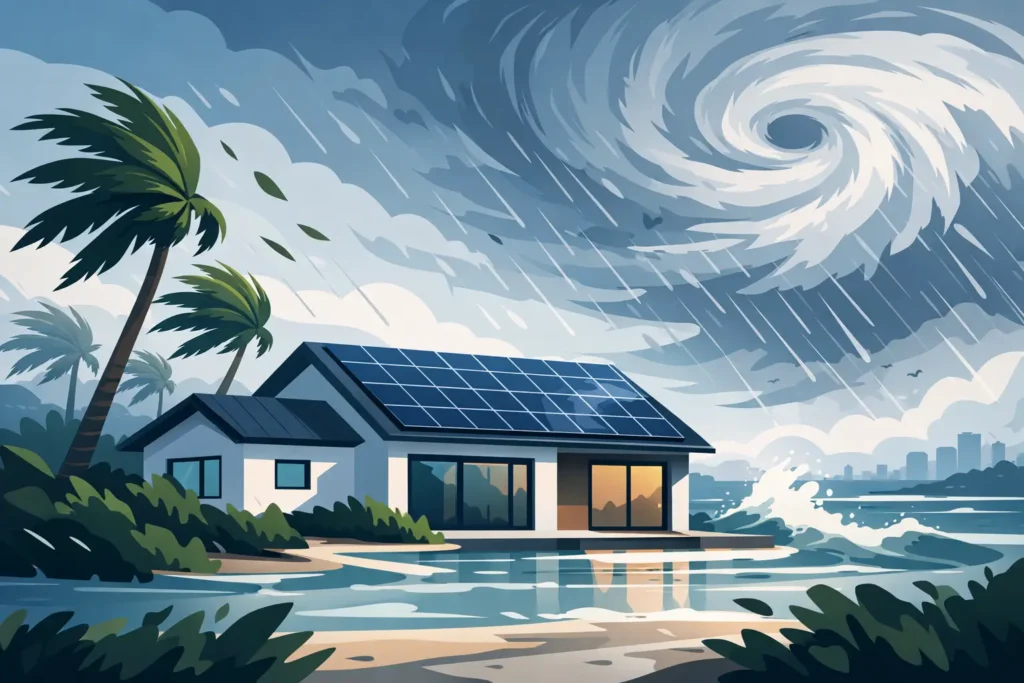
A solar system can lower a South Florida home’s electric bill for decades, but it also has to face the same wind, rain, flying debris, and roof stress as every other exterior improvement. So, are solar panels hurricane safe? When the system is properly engineered, securely mounted, and installed on a sound roof, solar panels can be built to withstand the demanding conditions common across Miami-Dade, Broward, and Palm Beach counties.
The key is not simply buying a panel labeled as durable. Hurricane performance depends on the complete system: the panel, racking, roof attachments, flashing, electrical connections, and the roof beneath it. A careful installation helps protect your investment before hurricane season arrives.
Are solar panels hurricane safe? It depends on the installation
Solar panels are not lightweight decorations sitting loosely on a roof. Modern panels and mounting systems are designed and tested for wind loads. Quality solar equipment is commonly rated to handle significant uplift and pressure, but product ratings alone do not make a home storm-ready.
Wind does not hit every roof the same way. It speeds up around corners, roof edges, ridges, and taller sections of the home. Those forces can pull upward on panels and racking, especially when an installation does not account for the roof shape, the building’s location, and local wind requirements.
That is why a solar project should begin with a site-specific plan. The installer needs to understand your roof structure, roof covering, available attachment points, panel layout, and the wind design requirements that apply to your property. In high-wind South Florida, details that may seem small – such as fastener placement and rail spacing – can make a major difference.
A properly designed system is intended to remain attached during severe weather. Still, no contractor can honestly promise that any roof-mounted product will be untouched by an extreme hurricane, falling tree, or direct debris strike. The goal is to reduce risk with the right products, engineering, and workmanship rather than treating solar as a one-size-fits-all installation.
Your roof is the foundation of hurricane-ready solar
The strongest solar mounting system cannot solve an aging, damaged, or poorly installed roof. If your shingles are near the end of their life, tiles are loose, flashing is failing, or the roof deck has water damage, adding solar first may create avoidable costs later.
Removing and reinstalling panels for a future roof replacement is possible, but it adds time and expense. For many homeowners, it makes better financial sense to address an older roof before installing solar. It also gives the project team an opportunity to coordinate the roofing and solar work so the finished system is designed as one protective package.
Roof penetrations deserve special attention. Solar mounts are typically anchored into the structure beneath the roof covering, then sealed with compatible flashing and waterproofing methods. Done correctly, this creates a secure attachment without inviting leaks. Done poorly, it can lead to water intrusion that may not become visible until months later.
Before moving forward, ask how the installer evaluates the roof’s condition, what mounting system they use for your roof type, and how they protect penetrations from water. Clear answers matter more than a rushed quote.
What makes a solar installation safer in high winds
Hurricane-resistant solar is a system of decisions, not one premium feature. Homeowners should expect an installer to address the factors that affect wind performance and long-term roof protection:
- Local engineering and permits: Plans should account for the applicable building code, wind zone, roof geometry, and structural conditions instead of relying on a generic layout.
- Secure attachments: Mounts, rails, clamps, and fasteners must be compatible with the roof and installed at the required spacing and depth.
- Quality flashing and waterproofing: Every roof penetration needs a proven water-management approach that works with the existing roofing material.
- Professional electrical work: Conduit, wiring, disconnects, and equipment must be secured so they are not left vulnerable to wind, water, or loose components.
- A clean panel layout: Proper setbacks and spacing can help manage wind exposure while preserving safe roof access for maintenance and future repairs.
These choices also support the value of your home. Buyers, insurers, and inspectors may all look more favorably on upgrades that are permitted, professionally installed, and backed by clear documentation.
Should you remove solar panels before a hurricane?
In most cases, no. Homeowners should not attempt to remove panels, loosen mounts, or disconnect rooftop equipment when a storm is approaching. Solar panels are installed as permanent electrical and structural components. Trying to take them down without trained professionals can damage the roof, expose wiring, create shock hazards, or leave you with unsecured equipment when time is short.
Instead, include your solar system in your regular hurricane preparation plan. Check your installer-provided documentation, keep copies of permits and warranties in a safe place, and know where the solar disconnect is located. If you notice visibly loose hardware, damaged wiring, or a panel that appears lifted, contact a qualified solar professional as early as possible – not when a named storm is already days away.
Your home should also have the broader protection plan South Florida weather demands. Impact-resistant windows and doors, a well-maintained roof, clear gutters and drains, and secured outdoor items all work together to reduce storm-related damage. Solar is one part of a stronger, more efficient home.
What to do with solar panels after a storm
After a hurricane, prioritize personal safety over checking the equipment. Do not climb onto the roof, touch downed wires, or inspect damaged panels up close if there is standing water or visible electrical damage. Even when utility power is out, solar equipment may produce electricity when exposed to daylight.
From the ground, look for obvious issues such as cracked panels, hanging conduit, bent racking, broken roof tiles, or water entering the home. Take photos only if it is safe to do so. If you see damage, contact your solar installer and roofing professional for an inspection before turning equipment back on or making repairs.
It is also possible for a system to look fine while the roof or mounting hardware has been affected. A professional inspection can check attachment points, seals, electrical connections, and panel output. That is especially worthwhile after a storm with strong local wind gusts, even if your neighborhood avoided visible damage.
Solar can be a smart storm-season investment
Solar does not make a home hurricane-proof, and it does not guarantee backup power during an outage. A standard grid-connected solar system typically shuts down when utility power goes out to protect line workers. If backup power is a priority, discuss battery storage and the electrical design needed to keep selected home systems operating safely.
That distinction matters. Panels can help reduce ongoing electricity costs, while a battery can add resilience during outages. The right setup depends on your household needs, budget, roof condition, and the appliances you want to support. For some homeowners, solar alone is the right first step. For others, a coordinated plan that includes roofing, impact protection, solar, and battery options offers greater long-term confidence.
Hurricane Heroes helps South Florida homeowners look at those decisions as one connected home-improvement plan, not a series of separate projects. Coordinating protective upgrades can reduce surprises, protect the roof before solar is installed, and make the most of each dollar invested in your property.
A hurricane-ready solar system starts well before the forecast cone appears. Choose a team that respects your roof, follows local requirements, explains the installation clearly, and treats your home’s protection as seriously as you do.