


 Español
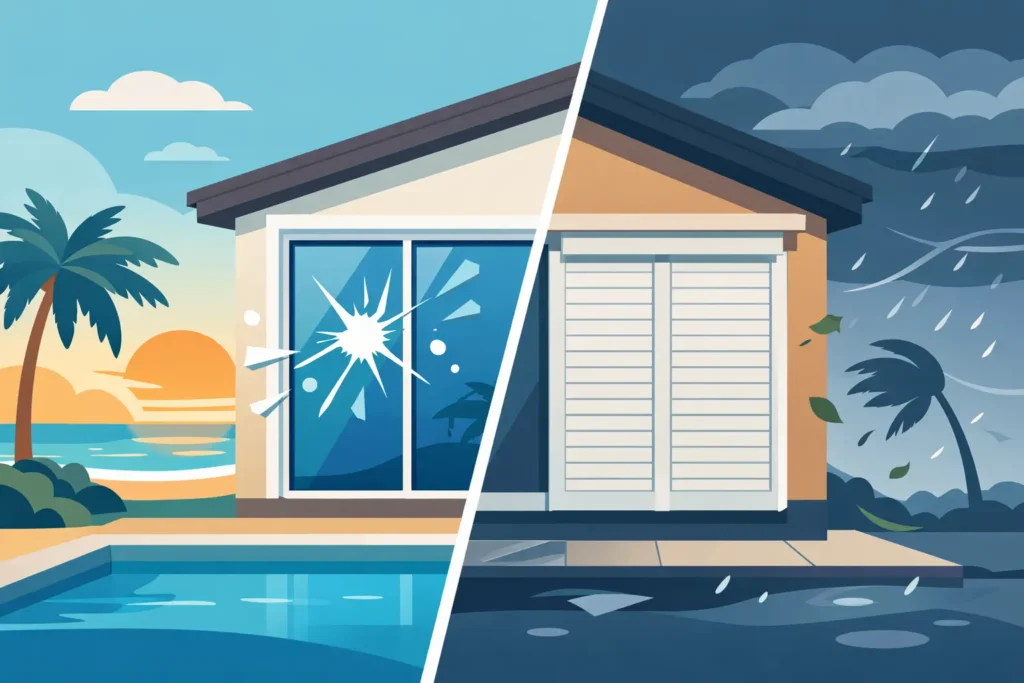
When a storm watch goes up in South Florida, the difference between impact windows vs shutters becomes very real, very fast. Homeowners are not thinking about product brochures at that point. They are thinking about how long prep will take, whether the house will stay protected, and what happens if they are out of town when the weather turns.
That is why this choice matters. Both options are built to help protect your home from hurricane-force winds and flying debris, but they do it in different ways, with different trade-offs in cost, convenience, appearance, and long-term value.
Impact windows vs shutters: the real difference
The simplest way to understand impact windows vs shutters is this: shutters are a protective layer you deploy over your existing windows, while impact windows are the window system itself. Impact windows are built with reinforced frames and laminated glass designed to resist breaking under heavy impact. Shutters sit on the outside and shield standard windows from debris and wind pressure.
Both can play an important role in storm protection. The better option depends on your budget, how often the property is occupied, your maintenance tolerance, and whether you want year-round benefits beyond hurricane season.
For some homeowners, shutters are the practical answer because they cost less upfront. For others, impact windows make more sense because they offer daily protection without any setup when a storm approaches.
What impact windows do well
Impact windows are popular in South Florida for one main reason: they are always working. You do not have to pull panels from storage, crank anything closed, or rush home to secure the property. Once they are installed, the protection is built into the home every day of the year.
That convenience matters more than many people expect. Storms do not always give you plenty of notice, and many homeowners are traveling, managing rental properties, or helping family members prepare. If you own a seasonal home or an investment property, impact windows can remove a major layer of stress.
They also offer benefits outside of storm season. Many homeowners notice quieter interiors, better energy efficiency, and improved UV protection for flooring, furniture, and window treatments. In a hot climate like Broward, Miami-Dade, and Palm Beach, that added efficiency can help reduce strain on your cooling system.
There is also the issue of curb appeal. Impact windows look like finished, permanent upgrades rather than temporary storm equipment. That can matter if you care about the appearance of your home or are thinking about resale value.
Where shutters still make sense
Shutters remain a valid option, especially for homeowners who want protection at a lower initial cost. If your existing windows are still in decent shape and you need a more budget-conscious storm solution, shutters can be a smart move.
They can also work well when used selectively. Some homeowners choose shutters for secondary openings, upper-story windows, or parts of the home where a full window replacement is not the first priority. In that case, shutters can buy time while you plan larger upgrades.
But shutters come with a responsibility. They only protect when they are closed and secured correctly. That means someone has to install or deploy them before the storm hits. For younger homeowners with time, storage space, and physical ability, that may be manageable. For older homeowners, frequent travelers, or families with multiple properties, it can become a burden quickly.
Different shutter types also create different experiences. Accordion shutters are easier to close than removable panels, while roll-down shutters offer faster deployment but usually cost more. So even within the shutter category, convenience and price vary.
Cost is not just the purchase price
If you are comparing impact windows vs shutters based only on the initial quote, shutters usually come out ahead. They are often the lower-cost entry point for hurricane protection, especially if you already have functional windows underneath.
But upfront price is only one part of the decision. Over time, homeowners also need to consider maintenance, repairs, aesthetics, and everyday value. Impact windows may cost more initially, but they can replace aging windows while adding storm protection, energy performance, and noise reduction in one project.
Shutters may be less expensive to install, but they do not improve the condition of old, drafty, or outdated windows behind them. If those windows are already due for replacement, installing shutters on top of them may only delay the bigger investment.
Insurance savings can also affect the math. Depending on the property, product approvals, and your carrier, impact-rated upgrades may support premium reductions or wind mitigation benefits. The same can be true for certain shutter systems. The important point is that the cheapest bid is not always the best long-term value.
Convenience matters more in real life
A lot of homeowners begin this comparison focused on product specs and finish it focused on lifestyle. That is because daily life in South Florida changes the equation.
If you are here full-time, physically able, and comfortable preparing your home before every storm, shutters may be enough. If you split time between states, own a rental, or simply do not want the yearly hassle, impact windows start to look much more attractive.
There is also peace of mind. With impact windows, you do not need to wait for the latest forecast to start protecting your home. The protection is already there. That can be especially valuable during fast-moving storm systems or when local supply and labor become stretched during an active season.
Security and everyday performance
Storm protection is the main reason most homeowners shop these products, but not the only reason. Impact windows also add a layer of security because the laminated glass is harder to breach than standard glass. That does not make them a substitute for a full security system, but it can be a meaningful upgrade.
Shutters can add security too, particularly when closed. The issue is that most people do not keep storm shutters shut year-round because they block light, affect appearance, and are impractical for daily use.
This is one of the biggest differences between the two options. Impact windows support everyday living. Shutters are mostly a storm-time defense.
Which option is better for older homes?
For older South Florida homes, the answer depends on the condition of the existing windows and the broader goals for the property. If the windows are outdated, leaking air, hard to operate, or showing signs of frame wear, replacing them with impact windows often makes more sense than adding shutters on top.
If the windows are relatively newer and the main concern is code-compliant storm protection, shutters may be enough for now. Some homeowners also take a phased approach, replacing the most vulnerable or visible openings first and using shutters elsewhere.
This is where an honest inspection matters. The right recommendation should account for the age of the home, opening sizes, permit requirements, and how long you plan to keep the property.
Impact windows vs shutters for resale value
If long-term value is part of your decision, impact windows usually carry more appeal. Buyers tend to understand the benefit right away because it is visible, permanent, and easy to appreciate. A home with newer impact-rated windows can feel more move-in ready and lower maintenance.
Shutters still add value, especially in storm-prone areas, but they are often seen as a practical feature rather than a premium upgrade. That distinction matters if you are investing in improvements with future resale in mind.
In many cases, impact windows also help modernize the exterior of the home. That visual upgrade can strengthen buyer interest before anyone asks about wind ratings or installation details.
So, what should a South Florida homeowner choose?
If your priority is the lowest upfront cost and you are comfortable handling storm prep yourself, shutters may be the right fit. They can provide solid protection when chosen carefully and installed properly.
If your priority is convenience, daily comfort, better appearance, and year-round value, impact windows are often the stronger investment. They ask for more upfront, but they also do more every day.
For many homeowners, this is not really a debate about which product is better in general. It is a question of which solution fits your home, your schedule, and your budget without leaving gaps in protection. That is why local guidance matters. In South Florida, the best answer is rarely one-size-fits-all.
A trusted contractor should be willing to walk through both options clearly, explain code and product approvals, and help you compare the real cost of waiting versus upgrading now. At Hurricane Heroes, that conversation starts with how you live, not just what product is easiest to sell.
The best storm protection is the one you will actually have in place when the wind starts rising.