


 Español
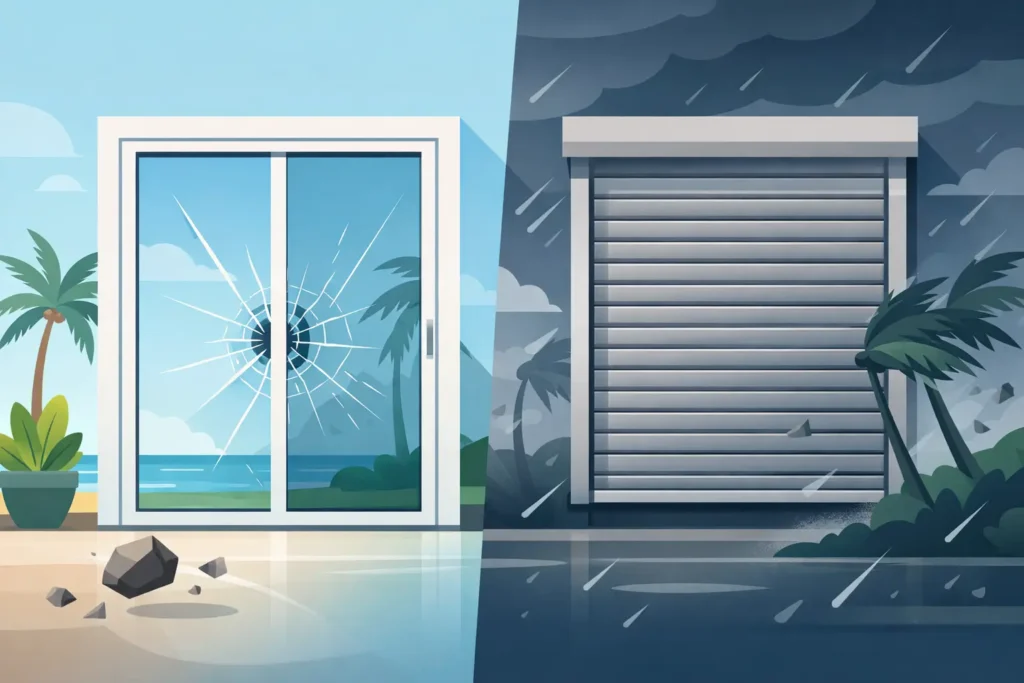
A sliding glass door is often the largest, most exposed opening in a South Florida home. When a storm is approaching, that one opening can shape a homeowner’s decision between impact doors vs hurricane shutters. Both can provide serious hurricane protection when properly selected and installed. The better choice comes down to how you use your home, what condition your existing doors are in, your budget, and whether you want protection that is ready every day or deployed before a storm.
Impact Doors vs Hurricane Shutters: The Core Difference
Impact doors are permanent replacement doors built with reinforced frames, heavy-duty hardware, and impact-resistant laminated glass. They are designed and tested to withstand specified wind pressures and impact from flying debris. Once installed, they protect the opening without requiring storm panels or last-minute preparation.
Hurricane shutters are exterior protective systems installed over an existing door or opening. Depending on the style, they may be accordion shutters, roll-down shutters, Bahama shutters, Colonial shutters, or removable panels. They work by creating a protective barrier when closed or installed before a storm.
Neither option is automatically right for every property. A well-installed shutter system can be a smart, cost-conscious solution. An impact door can be the better long-term upgrade when an existing door is aging, leaking, difficult to operate, or no longer performing the way it should.
Protection Starts With the Entire Opening
Homeowners sometimes focus only on the glass, but hurricane protection is an opening-system issue. The door slab, glass, frame, tracks, anchors, locks, surrounding wall, and installation all matter. A product is only as dependable as the way it is attached to the home.
Impact doors are engineered as complete systems. Their laminated glass is designed to stay in place even if the outer layer cracks after debris impact. That matters because a breach in a door or window can allow wind and rain into the home. Once internal pressure builds, roof and wall damage can become far more severe.
Hurricane shutters protect the existing door behind them. When the shutters are closed correctly, they help shield the glass from direct impacts and wind pressure. But homeowners need to be able to deploy them before conditions become dangerous. Removable panels must be located, carried, and fastened. Accordion systems need clear tracks and functioning locks. Roll-down shutters need maintenance and, in some cases, a plan for power loss.
For either option, choose products approved for your location and confirm that the installation meets current local requirements. Miami-Dade, Broward, and Palm Beach County homes may face different exposure conditions based on location, building height, and the specific opening. A professional evaluation should account for more than a generic wind rating.
Daily Convenience Is a Major Deciding Factor
The biggest lifestyle advantage of impact doors is simple: they are always working. You can leave for work, travel for the season, or respond to a storm warning without rushing to cover the door. For retirees, busy families, landlords, and homeowners who may not be in town during hurricane season, that peace of mind can carry real value.
Impact doors also keep natural light and views available year-round. You do not need to store panels in the garage or close shutters every time you leave for a weekend. For a patio, pool enclosure, waterfront view, or main entry, that convenience is hard to ignore.
Shutters require more involvement, but that does not make them a poor choice. Accordion shutters are relatively fast to close and remain attached to the home. Roll-down shutters can be especially convenient and may provide shade, privacy, and security beyond hurricane season. Bahama and Colonial styles can add curb appeal while offering protection when designed and rated for the opening.
Removable panels tend to demand the most preparation. They can work well for less frequently used openings, but they are not ideal for a homeowner who wants a fast, low-effort storm plan. If your hurricane checklist already feels overwhelming, a permanent impact upgrade may reduce one important task.
Cost: Upfront Price Versus Long-Term Value
Hurricane shutters often have a lower upfront cost than replacing a door with an impact-rated system. If your existing door is in good condition and you need to protect several openings on a controlled budget, shutters can be a practical way to improve storm readiness.
Impact doors cost more because they replace the existing opening with a new, tested system. That investment can make more sense when the current door has fogged glass, worn rollers, water intrusion, damaged frames, loose locks, or poor energy performance. Instead of paying to cover an aging door, you are upgrading the door itself.
The long-term value of impact doors may also include improved security, reduced outside noise, better comfort near the opening, and stronger buyer appeal. Energy savings vary by product, home orientation, existing conditions, and how the rest of the house performs, so they should not be treated as guaranteed. Still, replacing an old, inefficient patio or entry door can help address heat gain and air leakage.
Insurance discounts may be available for qualifying wind-mitigation features, but policies and documentation requirements vary. Homeowners should speak with their insurance carrier before making assumptions about premium savings. Keep permits, product approvals, invoices, and final inspection records organized for future insurance conversations and property sales.
Security and Privacy Beyond Hurricane Season
A quality impact door provides a stronger everyday barrier than a standard glass door. Laminated glass is more difficult to breach quickly, while upgraded frames and locking systems add another layer of protection. That can be especially valuable for rear sliders, ground-floor entries, and homes that sit vacant for part of the year.
Shutters can also enhance security, particularly roll-down and accordion systems. When closed, they create a visible physical barrier. The trade-off is that closed shutters block daylight and views. Some homeowners use them when traveling or during extended vacancies, while leaving them open for normal daily living.
If your priority is preserving the open feel of your home while improving security every day, impact doors usually offer the better balance. If privacy and the ability to fully close off an opening are higher priorities, certain shutter styles may have an advantage.
Appearance and Home Value Matter, Too
Your hurricane protection should not make you dislike the look of your home. Impact doors come in options that fit modern, coastal, traditional, and contemporary properties. The right configuration can brighten an interior, improve access to outdoor living space, and update the appearance of an older home.
Shutters can be discreet or decorative, depending on the system. Roll-down shutters can largely disappear into a housing box. Accordions are practical but more visible along the sides of an opening. Bahama and Colonial shutters make a stronger architectural statement, which some homeowners love and others prefer to avoid.
For investment properties, think about tenant use and maintenance. A permanent impact door is often easier for tenants because there is nothing to deploy. For seasonal homes, shutters may be useful when the property is unoccupied, but the owner should make sure the system remains accessible and properly maintained.
When a Combined Approach Makes Sense
You do not have to choose one strategy for every opening. Many South Florida homeowners combine impact doors or windows in high-use areas with shutters on secondary openings. For example, replacing a worn patio slider with an impact-rated door while keeping existing approved shutters on bedroom windows may create a better balance of cost, convenience, and protection.
A combined project can also make sense when you are planning roof work, window replacement, or solar installation. Coordinating exterior improvements can reduce disruption, help you make consistent design decisions, and give you a clearer picture of your home’s overall resilience. Hurricane Heroes helps homeowners evaluate these upgrades as connected parts of a stronger, more efficient property.
Questions to Ask Before You Decide
Before choosing impact doors or shutters, look closely at the door you already have. Is it difficult to slide, drafty, leaking, corroded, or visibly outdated? Does your household have the time and physical ability to secure shutters before every storm? Will you be home when a hurricane watch is issued? And are you planning to stay in the home long enough to benefit from a full replacement upgrade?
Also ask each contractor about product approvals, permit handling, installation methods, warranty coverage, project timing, and final inspections. The lowest quote is not always the best value if it leaves out necessary work or relies on a product that is not appropriate for your opening.
A storm-ready home should feel easier to live in, not harder to manage. Whether you choose impact doors, hurricane shutters, or a combination of both, the right next step is a clear assessment of your openings and a plan that protects your family before the forecast turns serious.