


 Español
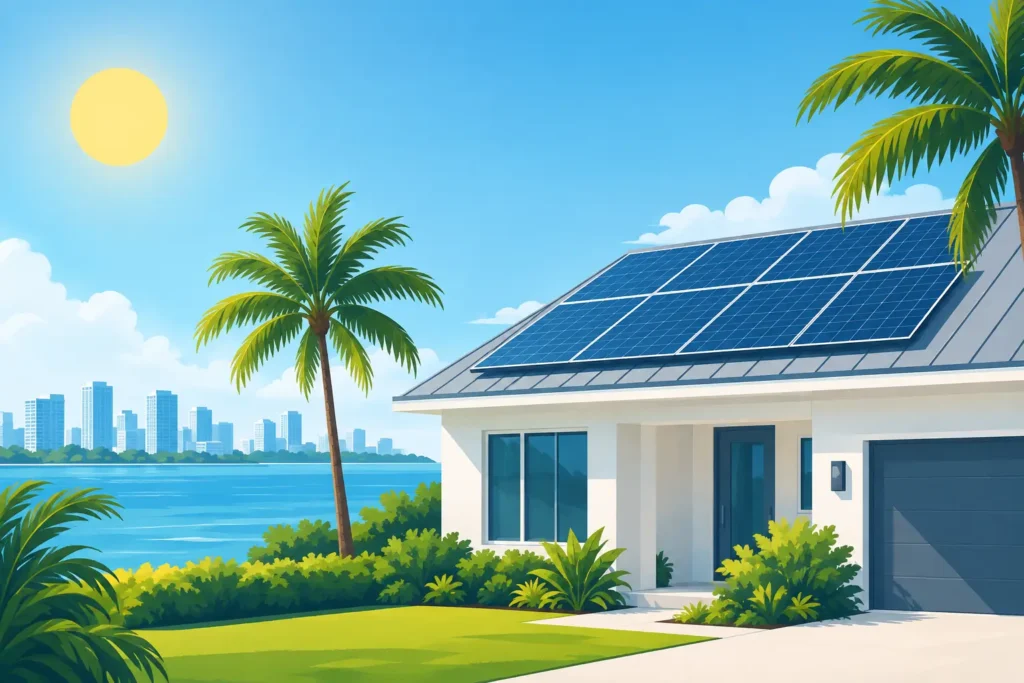
A solar panel may look like a simple rectangle on your roof. In South Florida, it is part of your home’s defense against high electric bills, intense heat, and unpredictable weather. The best solar panels for homes are not simply the panels with the highest efficiency rating. They are the ones that fit your roof, your energy use, your budget, and a professionally planned installation that respects Florida’s wind and building requirements.
For homeowners in Broward, Miami-Dade, and Palm Beach counties, solar should be treated like any other major exterior upgrade. The right system can help control long-term utility costs and add value to your property. The wrong system, or the wrong installer, can leave you with poor production, roof complications, and unanswered questions when you need help.
What Makes a Solar Panel Right for a Florida Home?
Panel quality matters, but it is only one part of the decision. South Florida roofs face high temperatures, heavy rain, salt air near the coast, and hurricane-force winds. A good solar recommendation starts with the entire property, including roof age, shade patterns, electrical capacity, and your household’s actual power use.
Efficiency is a useful starting point. Higher-efficiency panels produce more electricity in less roof space, which can be a major advantage for homes with smaller roof areas, skylights, vents, or complex rooflines. A larger roof with few obstructions may have more flexibility, allowing homeowners to balance efficiency and equipment cost without sacrificing the system size they need.
Heat performance also deserves attention. Solar panels naturally lose some output as temperatures rise. Since South Florida rooftops can get extremely hot, look beyond the headline wattage and ask how the panel is expected to perform under real operating conditions. A panel that looks impressive on a spec sheet but performs poorly in heat may not be the best value for your home.
The Best Solar Panels for Homes: What to Compare
There is no one brand or model that wins for every property. Premium monocrystalline panels are often a strong choice for homeowners who want maximum production from limited roof space. They generally offer high efficiency, clean aesthetics, and strong long-term warranties. For many South Florida homes, that combination makes sense.
That said, a value-focused panel from a reputable manufacturer can be the smarter choice when the roof has plenty of usable space and the goal is to keep the project cost under control. More panels at a lower price can sometimes produce the same total system output as fewer premium panels. The better option depends on your roof layout and financial goals, not a logo on the panel.
When comparing options, focus on these four practical factors:
- Panel efficiency and wattage: These affect how much power you can produce within your available roof space.
- Temperature performance: Lower heat-related losses can matter in Florida’s long summer months.
- Product and performance warranties: A strong warranty should cover both the equipment and its expected power output over time.
- Manufacturer stability: Solar is a long-term investment. Choose equipment from companies with a credible track record of honoring warranties and supporting installers.
A trustworthy installer should explain the trade-offs clearly. If a higher-priced panel will not produce enough additional electricity to justify its cost, you deserve to know that before signing a contract.
Monocrystalline Panels Are Usually the Best Fit
For most residential projects, monocrystalline panels are the leading choice. They are efficient, widely available, and well suited to homeowners who want substantial production without covering every inch of the roof. Their dark appearance is also preferred by many homeowners who care about curb appeal.
Polycrystalline panels are less common in new premium residential installations. They can cost less, but they generally require more space for the same output. Thin-film panels have certain specialized uses, but they are not typically the first recommendation for a standard South Florida home roof.
The panel itself matters, yet system design matters just as much. A well-designed system using dependable mid-tier equipment can outperform an oversized or poorly positioned system with premium panels.
Your Roof Should Be Evaluated Before Your Panels
Solar panels are built to last for decades. Your roof needs to be ready for that same timeline. Installing solar on a roof that is near the end of its life can create unnecessary expense later, because the panels may need to be removed and reinstalled for a roof replacement.
This is especially important in hurricane-prone areas. If your home needs a new roof, impact-resistant windows, or doors, coordinating these upgrades can reduce disruption and help ensure that each part of the exterior works together. Roof replacement first, then solar, is often the cleanest path for an aging roof.
A proper roof assessment should consider its material, condition, slope, drainage, penetrations, and usable space. It should also account for vents, chimneys, and areas affected by tree shade. Even a small amount of shade can reduce output, particularly when a system is designed without the right inverter technology.
Inverters Can Make or Break Solar Performance
Panels make electricity, but inverters make that electricity usable in your home. They convert direct current from the panels into the alternating current used by household appliances.
A central string inverter can be a cost-effective fit for a straightforward, mostly unshaded roof. Microinverters, which are installed at individual panels, can be more useful when roof sections face different directions or receive partial shade throughout the day. Power optimizers offer another option, combining panel-level performance management with a central inverter.
There is no universal winner. A home with an open, uniform roof may not need the added expense of panel-level equipment. A roof with palms, neighboring trees, dormers, or multiple orientations may benefit from it. Your installer should show you how the design accounts for your specific roof rather than offering a one-size-fits-all package.
Storm-Ready Installation Is Not Optional
Solar panels do not make a home hurricane-proof, and no responsible contractor should promise that. What matters is using properly engineered mounting equipment, approved attachments, and installation practices designed for local wind conditions and permitting requirements.
The mounting system is as important as the panel brand. It must be correctly attached, flashed, and sealed to protect both the panels and the roof below. Electrical components also need careful placement and code-compliant installation. A low bid that cuts corners on engineering, permitting, roof protection, or electrical work can become expensive long after the installation crew leaves.
Ask direct questions before choosing an installer. Who handles permits and inspections? How will roof penetrations be sealed? What workmanship warranty is included? What happens if you need service after installation? Clear answers are a sign that the company understands the responsibility that comes with working on a Florida home.
Size the System Around Your Bills, Not a Sales Pitch
A solar system should begin with a review of your electricity bills, ideally across a full year. South Florida energy use often climbs during the hottest months because air conditioning works harder. Pool pumps, electric vehicle charging, home offices, and growing families can also change a home’s consumption quickly.
Avoid assuming that a system should offset every kilowatt-hour you use. A full offset may be a good goal for some homeowners, but it depends on roof space, utility rules, budget, and future plans. If you expect to add an EV charger or replace an older air conditioner, it may make sense to plan for that now.
Solar batteries can provide another layer of value, especially for homeowners who want limited backup power during outages. However, a battery adds significant cost, and it will not automatically run an entire house indefinitely. The best approach is to identify essential loads, such as refrigeration, lights, internet equipment, and selected outlets, then design backup power around those priorities.
Look at Savings Honestly
Solar can reduce your dependence on utility power, but savings vary by system size, household usage, electricity rates, weather, equipment performance, and available incentives. Production estimates should be realistic, not inflated to force a quick sale.
Ask for a proposal that clearly separates equipment costs, installation, permitting, any roof work, financing terms, estimated production, and warranty coverage. If you are considering PACE financing or another payment option, take time to understand the repayment structure and how it may affect future property transactions. Financing can make a major improvement more accessible, but it should always be chosen with clear eyes.
The strongest solar investment is one that supports your larger home plan: a sound roof, efficient cooling, protected openings, and a system sized for how you actually live. That is how solar becomes a practical property upgrade rather than just another monthly payment.
A South Florida home deserves more than a generic panel package. Choose a team that evaluates the roof, explains the numbers, and builds with the same care you expect from any project meant to protect your family. Hurricane Heroes can help homeowners start that conversation with a clear, property-specific solar assessment.