


 Español
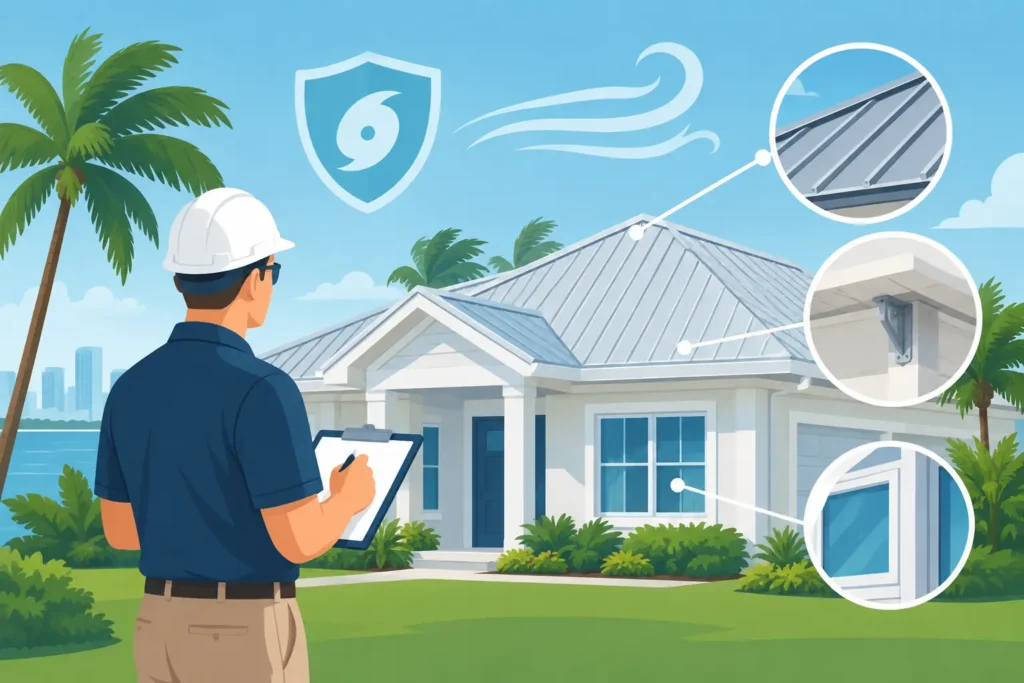
A wind mitigation inspection can turn the hurricane protection already built into your home into documentation your insurance company can review. For homeowners facing high premiums across Broward, Miami-Dade, and Palm Beach counties, South Florida wind mitigation inspections are often a practical first step toward identifying potential savings and making smarter upgrade decisions.
The inspection is not a sales pitch, a home inspection, or a guarantee that your insurance rate will drop. It is a focused review of specific construction features that can reduce wind damage during a hurricane. When those features are present and properly documented, many Florida insurers may offer premium credits. The actual discount depends on your carrier, policy, home age, location, and underwriting rules.
What a Wind Mitigation Inspection Looks For
A qualified inspector completes a standardized wind mitigation form and takes photographs to support the findings. The goal is to verify how well your home is designed to resist high winds, wind-driven rain, and pressure changes that can occur when a storm strikes.
The inspector generally reviews the roof, attic area, exterior openings, and the connection points that hold your home together. They are looking for documented evidence, not assumptions. A newer roof alone does not automatically mean every mitigation credit applies, and impact windows alone may not qualify a home for the full opening-protection credit if another opening remains unprotected.
Roof Covering and Roof Age
The inspector will record the roof covering type and the date the roof was permitted or installed when documentation is available. While a newer roof can be an advantage for insurance and property value, its age is only one part of the wind mitigation picture.
A roof that meets current code requirements may include stronger fastening methods and better water protection than an older system. Still, homeowners should not confuse a wind mitigation inspection with a roof condition assessment. An inspector may document the roof type and relevant construction features, but a roofing professional is the right person to evaluate wear, leaks, remaining service life, or whether replacement is needed.
Roof Deck Attachment
Under the shingles, tile, or metal roofing is the roof deck – typically plywood or oriented strand board. The inspector may review attic areas to determine how the deck is attached to the roof framing. Nail size, spacing, and fastening patterns matter because a more securely attached roof deck can better resist uplift forces during a storm.
This detail is rarely visible from the driveway, which is why attic access can be valuable. If the attic cannot be safely accessed or the attachment cannot be confirmed, the inspector cannot simply give credit based on the home’s appearance.
Roof-to-Wall Connections
Your roof must remain connected to the walls beneath it when wind pressure increases. Inspectors look for the type of connection used, such as clips, single wraps, double wraps, or toe nails. Stronger verified connections can be associated with better mitigation credits.
This is one of the areas where homeowners sometimes find a gap between a home’s age and its protection level. A beautifully maintained home may still have older construction details hidden in the attic. In some cases, targeted retrofit work can improve the connection. In others, access limitations or construction layout may affect what is practical. A contractor should assess the improvement options before any work is planned.
Roof Geometry
The shape of your roof can influence wind performance. Hip roofs, which slope down on all sides, often perform differently in high winds than gable roofs. The inspector measures the roof geometry based on the percentage of hip versus non-hip roof perimeter.
This is not a feature most homeowners would change solely for an insurance credit. A roof replacement is a major project, and design decisions should balance storm protection, drainage, appearance, cost, and local code requirements. But if your home already has qualifying hip geometry, the inspection can make sure it is properly recorded.
Secondary Water Resistance
Wind damage is not the only threat during a hurricane. If the roof covering is compromised, wind-driven rain can enter through gaps in the roof deck and cause major interior damage. Secondary water resistance is a sealed layer beneath the roof covering that helps limit that intrusion.
It is commonly installed during a roof replacement, making it a valuable feature to discuss before choosing a new roofing system. It may be difficult to verify after the fact without clear installation records, permitted project documents, or visible evidence. Keeping copies of permits, contracts, photos, and product information can make future inspections easier.
Why Opening Protection Carries So Much Weight
Windows, exterior doors, garage doors, skylights, and other glazed openings are critical to a home’s hurricane defense. If a window breaks or a door fails, powerful wind can enter the home and increase pressure on the roof and walls. That chain reaction can cause far more severe damage than a broken pane of glass.
For this reason, inspectors look closely at opening protection. Impact-resistant windows and doors are one way to protect openings. Approved hurricane shutters, panels, or other rated systems may also qualify when they meet the applicable requirements and cover the necessary openings.
The key word is complete. A home with impact windows on the front elevation but an unprotected rear sliding glass door may not receive the same credit as a home with verified protection on every required opening. Garage doors deserve special attention as well. They are large, exposed, and often overlooked until a storm is approaching.
When planning upgrades, consider the home as a system. Replacing a few visible windows may improve comfort, curb appeal, and security, but complete opening protection can provide a stronger hurricane-readiness strategy and may be more meaningful for insurance documentation.
When to Schedule a South Florida Wind Mitigation Inspection
You can schedule an inspection at any time, but a few moments tend to make the most sense. One is when you are shopping for homeowners insurance or reviewing a renewal premium. Having a current report gives you information to share with your agent or carrier before you make decisions.
Another good time is after a major upgrade. If you have replaced the roof, installed impact windows and doors, added a rated garage door, or completed a roof-to-wall retrofit, an updated inspection may document features that were not shown on an older report.
It can also be helpful before you begin a large improvement project. The report can reveal which protective features your home already has and where the biggest gaps may be. That helps you avoid spending money based on guesswork. For example, a homeowner considering new windows may learn that the roof deck attachment or garage door also deserves attention.
Do not wait until a named storm is moving toward Florida. Inspectors, contractors, insurers, and permit offices become busy quickly during hurricane season. Planning early gives you time to gather records, compare improvement options, and complete work without rushed decisions.
How to Prepare for the Appointment
A wind mitigation inspection is usually straightforward, but access and paperwork can affect what the inspector can verify. Make sure the inspector can access the attic, garage, exterior doors, and all sides of the home where possible. Move stored items away from attic hatches or electrical panels if they block safe entry.
Bring any documents you have from past work, especially roof permits, final inspections, invoices, manufacturer approvals, window and door labels, shutter documentation, and photos taken during installation. Do not worry if you do not have every record. The inspector will document what can be observed, but supporting documents may help confirm features that are otherwise hidden.
If you own a rental property or manage several homes, keep these records organized by address. A current report, paired with upgrade documentation, can make insurance conversations less stressful and help you plan capital improvements across the portfolio.
Turning Inspection Results Into a Stronger Home
A report may show that your home already has valuable protective features. It may also reveal opportunities to improve protection, reduce water intrusion risk, and potentially pursue insurance credits. The right next step depends on what the report finds, the age of your home, your budget, and whether you are already planning renovations.
A roof replacement can be the right time to add secondary water resistance and ensure the new system is installed to current requirements. Impact-resistant windows and doors can protect vulnerable openings while improving everyday comfort and noise control. Solar panels may support long-term energy goals, but they should be planned carefully with the roof’s age and condition in mind so you do not create an avoidable removal and reinstallation expense later.
Hurricane Heroes helps South Florida homeowners coordinate roofing, impact opening, and solar projects with a focus on protection, value, and clear next steps. Financing options, including PACE-related education where available and appropriate, can also help homeowners evaluate projects without assuming every improvement must be paid for in one large upfront amount.
Before the next storm season puts pressure on every decision, get a clear picture of how your home is built, keep your records close, and use the findings to make upgrades that protect the people and property you care about.