


 Español
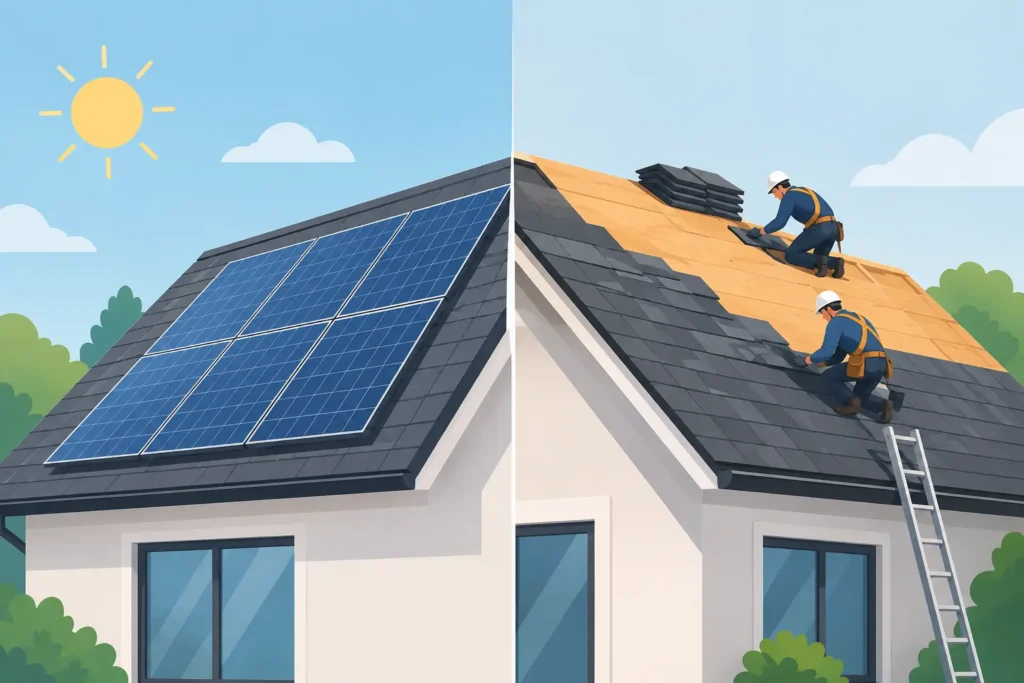
A solar proposal can make lower electric bills feel close enough to touch. But before panels go on your South Florida home, there is one decision that can protect or complicate the entire investment: solar panels vs roof replacement. Putting solar on a roof that is nearing the end of its useful life may mean paying to remove and reinstall those panels just a few years later.
For most homeowners, the better sequence is simple: make sure the roof is ready first, then install solar. The details matter, though. Roof age, material, storm history, financing, and your plans for the property all affect the right answer.
Why roof condition should lead the decision
Solar panels are designed to last for decades. Your roof needs to be able to support that same long-term plan. While panels do not automatically damage a properly installed roof, they make future roofing work more involved. If shingles, underlayment, flashing, or roof decking need attention after solar is installed, the array may need to be professionally detached and reinstalled before the roofer can reach the affected area.
That adds labor, coordination, permitting considerations, and cost to what could have been a straightforward roof replacement. It can also delay work after a major storm, when reliable roofing crews are already in high demand.
In South Florida, this is not only a question of age. Our roofs face intense UV exposure, heavy rain, wind-driven debris, salt air near the coast, and hurricane-season pressure. A roof that looks acceptable from the driveway may still have worn seals, loose tiles, deteriorated underlayment, or prior wind damage that deserves a closer inspection.
A new roof creates a clean starting point. It allows your roofing and solar plans to work together, gives you confidence in the structure below the panels, and helps protect the value of both upgrades.
Solar panels vs roof replacement: the practical rule
If your roof is older, leaking, damaged, or approaching the point where replacement is likely within the next several years, replace the roof before installing solar. This is generally the more cost-conscious and protective choice.
If your roof is relatively new, in strong condition, and has been inspected by a qualified professional, solar may be the right next project. There is no need to replace a sound roof early simply because you are considering clean energy. The goal is to avoid placing a long-term solar system over a short-term roofing problem.
Homeowners often ask for a precise age cutoff. There is not one. Roofing materials age differently, and installation quality, maintenance, ventilation, exposure, and storm history all matter. A roof with a long expected service life may be a strong candidate for solar. A roof of the same age with recurring repairs or visible wear may not be.
Signs roof replacement should come first
A professional roof evaluation is the clearest answer, but several warning signs should move roof replacement to the top of your list. These include active or past leaks, water stains on ceilings, missing or cracked shingles or tiles, curling shingles, deteriorated flashing, soft areas in the roof deck, and frequent repair calls.
You should also pause before solar if your roof has sustained hurricane damage, even if temporary repairs stopped the leak. Wind can lift materials and compromise seals in ways that are not always obvious from the ground. A complete inspection helps determine whether repair is enough or whether replacement is the smarter long-term investment.
For homeowners planning to sell within a few years, a new roof can also reduce buyer concerns and improve confidence during inspections. When paired with solar, it sends a strong message: the home has been updated for durability, efficiency, and lower operating costs.
When solar can reasonably come first
Solar can come first when the roof has substantial useful life remaining and an inspection confirms it is in good condition. This is common for homes with newer roofing systems, well-maintained tile roofs, or recently completed replacements.
The solar design still needs to respect the roof. Panel placement should account for vents, valleys, ridges, drainage paths, and access areas. A quality installation is not just about fitting the maximum number of panels onto a roof. It is about designing a system that performs well while preserving access for future maintenance.
Ask direct questions before signing a solar agreement: How old is my roof? Is there any evidence of water intrusion or storm damage? What happens if roofing work is needed later? Who handles panel removal and reinstallation? Clear answers now prevent expensive surprises later.
The cost of doing projects in the wrong order
Installing solar before a needed roof replacement can create two separate projects where one coordinated plan would have done the job. When roofing work requires panel removal, homeowners may face disconnect and reinstallation costs, delays in energy production, and the added task of coordinating multiple contractors.
There can also be warranty questions. Roofing and solar warranties are separate, and homeowners should understand exactly who is responsible for penetrations, flashing, system components, and damage caused during later work. Keep copies of all proposals, permits, inspections, warranties, and final photos. These records can be valuable after a storm, during an insurance claim, or when selling the home.
Replacing the roof first does require a larger upfront decision. Yet it may protect you from spending more later while giving your solar system a stronger foundation. For many South Florida homeowners, that peace of mind is worth more than rushing to the next electric bill cycle.
Plan for hurricanes, not just sunshine
Solar is an energy upgrade, but in South Florida it should be planned as part of a broader resilience strategy. A roof is your home’s first line of defense against rain and wind. Impact-resistant windows and doors help protect openings. Solar can help reduce ongoing energy costs. Together, these improvements can support a safer, more efficient home with stronger long-term appeal.
That coordination matters when permits, installation schedules, and financing are involved. Completing a roof replacement first can make solar layout and scheduling more predictable. It also gives installers a clear view of the final roof surface rather than asking them to design around a roof that may soon change.
Hurricane Heroes helps homeowners coordinate roofing and solar improvements with the practical realities of South Florida weather, property needs, and budget planning. If financing is part of your decision, ask how available payment options work, what the full obligation includes, and how the project timeline affects payments. The best financing choice is one you understand clearly and can manage comfortably.
A simple way to make the decision
Start with a roof inspection, not a solar sales number. Request an honest assessment of the roof’s condition, remaining life, and any repairs needed before panels are installed. Then compare the expected roof timeline with your solar goals.
If replacement is likely soon, complete the roof first and design solar around the finished system. If the roof is sound, move forward with solar while documenting its condition and understanding the installer’s workmanship and service commitments.
Do not let a promising solar estimate pressure you into skipping this step. A solar system should reduce stress and monthly expenses, not create a costly roof project down the road. The right plan is the one that keeps your home protected through the next storm season and ready to deliver savings for years to come.