


 Español
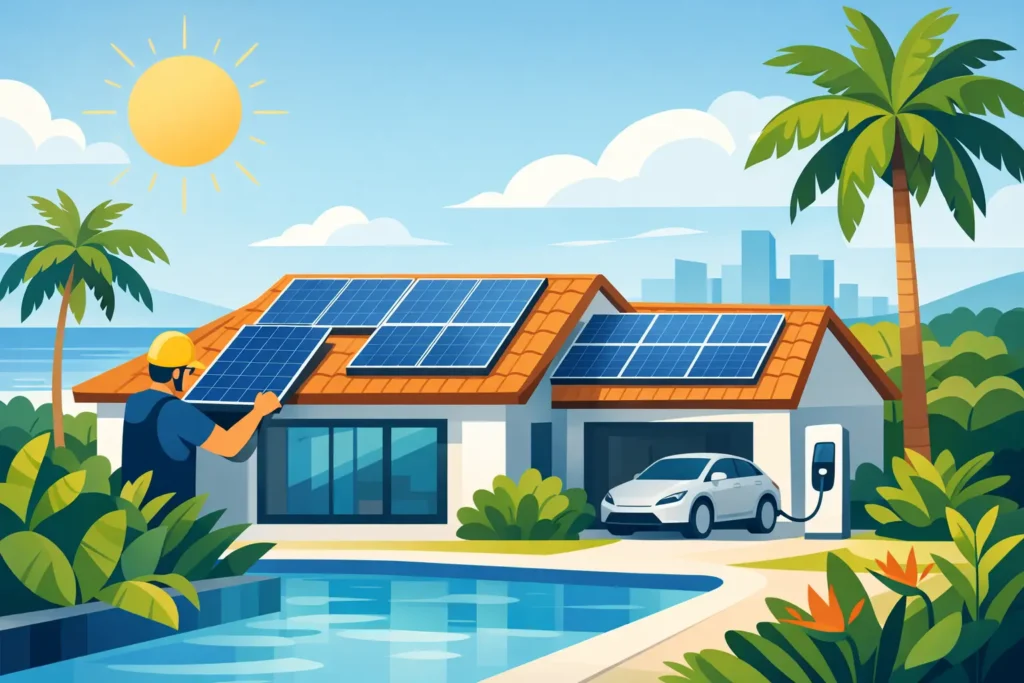
A solar quote can look simple: panels on the roof, lower electric bills, and a cleaner way to power your home. But in South Florida, knowing how to add solar panels starts with a more important question: is your roof ready to protect both your home and your investment through heat, rain, and hurricane season?
Solar can be an excellent upgrade for homeowners in Broward, Miami-Dade, and Palm Beach counties. It can help offset daytime electricity use, reduce dependence on the grid, and add value to a home that is already built for efficiency. The right project, however, begins with the roof, the structure, local permitting, and a plan that fits your household’s energy goals.
How to Add Solar Panels Without Compromising Your Roof
Solar panels are designed to last for decades. If your roof is nearing the end of its useful life, installing panels first can create an avoidable expense later. When a roof needs replacement, the panels generally must be removed and reinstalled before the new roofing system can be completed.
That is why a roof inspection should come before finalizing a solar design. A qualified contractor will look at the roof’s age, condition, slope, material, drainage, penetrations, and areas of existing damage. They should also evaluate the structure to confirm it can support the planned system and meet applicable building requirements.
For many South Florida homeowners, combining a roof replacement and solar installation is the smarter route. It gives you a fresh, properly installed roofing system beneath the panels and allows the project to be coordinated by one team. It also creates an opportunity to plan panel placement around roof lines, vents, attic ventilation, and future maintenance access.
If your roof is newer and in good condition, solar may still be a strong fit. The goal is not to replace a roof unnecessarily. The goal is to avoid mounting a long-term energy system onto a surface that may need major work in only a few years.
Start With Your Energy Use, Not a Panel Count
The number of panels your neighbor has does not tell you what your home needs. A solar system should be designed around your actual energy use, roof space, shade, utility rate structure, and budget.
Start by gathering a full year of electric bills. In South Florida, air conditioning can make summer usage much higher than winter usage, so one low-use month does not provide the full picture. Your installer can use this history to estimate how much electricity a solar array may produce and what portion of your usage it may offset.
You will also want to consider changes ahead. A new electric vehicle, pool heater, home addition, or larger air-conditioning system can increase demand. On the other hand, impact windows and doors, improved insulation, and a more efficient HVAC system can lower it. Planning these upgrades together can prevent an undersized or oversized solar system.
A good design is not automatically the largest design. It is a system that makes financial sense for your home, produces reliably, and works within available roof space and utility rules.
Make Sure Your Property Can Support Solar
Solar panels need direct sunlight, but they do not need every inch of the roof to face the same direction. South-facing roof areas often produce strongly, while east- and west-facing sections can also be productive and may better match a household’s morning or late-afternoon electricity use.
Shade is one of the biggest variables. Mature trees, chimneys, neighboring buildings, roof equipment, and even future construction can affect output. A site evaluation should identify shading patterns rather than relying on a quick visual guess.
The installer should also account for the realities of Florida weather. Mounting points, flashing, attachment methods, and electrical equipment placement all matter. Roof penetrations must be properly sealed, and equipment must be installed according to current local codes and manufacturer requirements. A low price is not a substitute for correct engineering, quality materials, and careful workmanship.
For homeowners near the coast, corrosion resistance deserves special attention. Salt air can be hard on exterior components over time. Ask what racking, fasteners, conduit, and protective measures are being specified for your location.
Understand Permits, Utility Approval, and Inspections
Adding solar is not a do-it-yourself roofing project. Your contractor should manage the design, permit application, installation, inspections, and utility interconnection process so you are not left trying to coordinate multiple agencies on your own.
Requirements vary by municipality and utility provider, but a typical project involves plans, permit approval, installation, local inspections, and permission from the utility before the system is turned on. Timelines can change based on permit volume, inspection availability, roof work, and utility processing.
Before work begins, make sure you understand these four parts of the agreement:
- The proposed system size and estimated annual energy production
- The scope of roof work, electrical upgrades, and panel installation
- The equipment warranties and workmanship warranty
- The expected permit, inspection, and utility approval timeline
A reputable solar contractor will explain what is included, what could affect the schedule, and who is responsible at each stage. Clear expectations protect the homeowner and help the job move forward without surprises.
Choose the Right Solar Equipment for Your Goals
Most residential solar systems include photovoltaic panels, mounting hardware, inverters, electrical wiring, a monitoring system, and required safety disconnects. The panel converts sunlight into electricity, while the inverter makes that electricity usable for your home.
The inverter choice can affect performance and maintenance. Some systems use one central inverter, while others use microinverters or optimizers that manage power at the panel level. There is no one-size-fits-all answer. Roof complexity, shading, budget, monitoring preferences, and service needs all play a role.
Battery storage is another decision. Solar panels alone typically do not keep your home powered during an outage unless the system is designed with battery backup and the proper transfer equipment. That distinction matters in hurricane country.
A battery can provide backup power for selected essentials, such as refrigeration, lights, internet equipment, and certain outlets. Backing up an entire home, especially large air-conditioning systems, usually requires more battery capacity and a larger investment. Some homeowners choose solar first and add battery storage later. Others want both from the beginning because outage protection is a central priority.
Plan for Hurricane Season and Long-Term Maintenance
Properly permitted and professionally installed solar systems are engineered to meet applicable wind-load requirements. Still, solar is part of your home’s exterior system, not a separate afterthought. The roof, mounting hardware, flashing, electrical components, and surrounding openings should all work together to help protect the property.
After a major storm, do not climb onto the roof to inspect panels yourself. Look for visible damage from the ground, check the monitoring system for unusual performance, and contact a qualified professional if you see loose equipment, damaged wiring, broken glass, or roof leaks.
Routine maintenance is generally limited, but it should not be ignored. Leaves, heavy debris, and occasional dirt buildup can reduce output. Monitoring can help identify a sudden drop in production that may point to shading, equipment issues, or a needed service visit. Keep copies of your permits, warranties, final inspection records, and equipment information in a safe place.
Make the Numbers Work for Your Home
Solar savings depend on your electricity use, system production, utility rates, financing terms, and how long you plan to own the property. Be cautious with any promise of a guaranteed bill amount without a careful review of your usage and local conditions.
Many homeowners explore financing because paying the full project cost upfront is not always practical. Depending on eligibility and current program rules, PACE-related financing education may help homeowners understand options for qualifying improvements. It is wise to review repayment terms, property-related obligations, and how financing may affect a future sale or refinance before moving forward.
The best value often comes from coordinating solar with other resilience improvements. A new roof, impact-resistant windows and doors, upgraded insulation, and efficient cooling can reduce energy waste while strengthening the home against severe weather. Hurricane Heroes helps South Florida homeowners approach these projects as one coordinated plan, with practical guidance from the roofline to the solar array.
Your home should not force you to choose between protection and efficiency. Start with an honest roof assessment, a solar design based on real energy use, and an installation team that understands South Florida construction. With the right plan in place, every sunny day can support a stronger, more efficient home.