


 Español
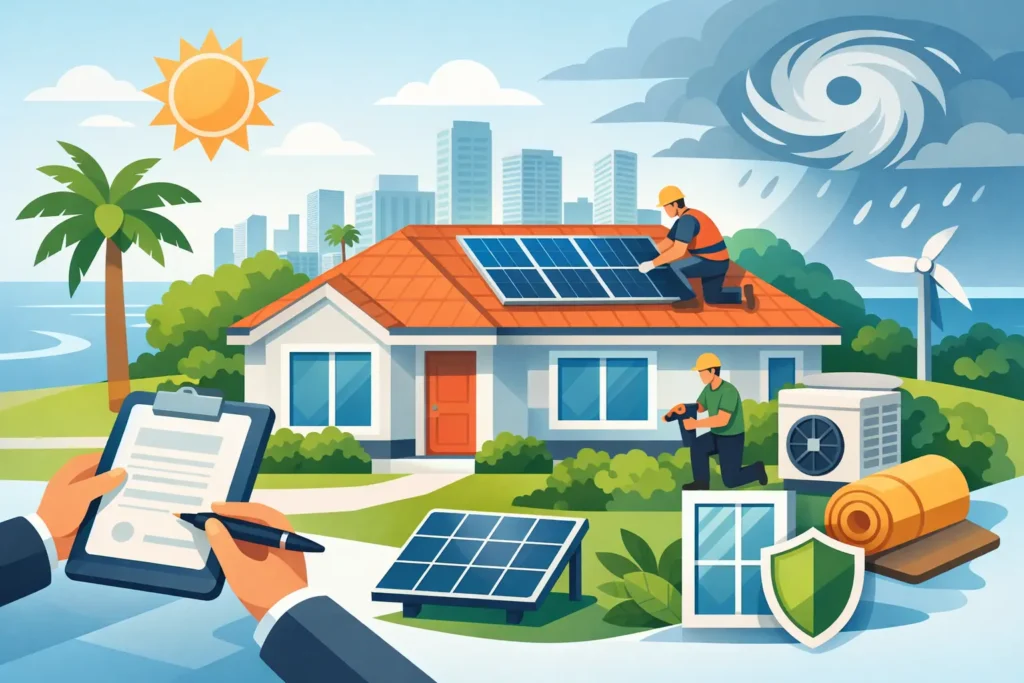
A roof nearing the end of its life, older windows that rattle in high winds, and rising electric bills can turn a South Florida home into a source of stress. PACE financing may offer a practical way to address those needs now instead of waiting until a storm season, insurance deadline, or major repair forces the issue.
For homeowners in Broward, Miami-Dade, and Palm Beach counties, the appeal is straightforward: qualifying improvements can be financed without a large upfront payment, helping make hurricane protection and energy upgrades more accessible. But it is not the right fit for every property or financial situation. Understanding how it works before signing an agreement is the best way to make a confident decision.
What Is PACE Financing?
PACE stands for Property Assessed Clean Energy. It is a form of property-based financing designed for eligible energy efficiency, renewable energy, and wind-resistance improvements. Rather than functioning like a typical personal loan, approved financing is generally repaid through a voluntary assessment added to the property tax bill.
The financing is tied to the property, not simply to the individual borrower. That distinction matters. If you sell the home, the assessment may stay with the property, subject to the terms of the agreement and the requirements of a buyer, mortgage lender, and title company. In some cases, an owner may choose or be required to pay off the remaining balance at closing.
For many homeowners, the major benefit is the ability to complete a meaningful improvement project without draining savings or taking on a traditional monthly loan payment. Eligibility is often based heavily on property factors, including equity and tax-payment history, rather than relying only on a conventional credit score.
Which Home Improvements May Qualify?
PACE programs and available measures can vary by location and provider, so approval is never automatic. Still, the kinds of projects that matter most to South Florida homeowners often align with the program’s purpose: reducing energy use and improving resilience against severe weather.
Eligible projects may include roof replacement, impact-resistant windows, impact doors, solar panel installation, insulation, HVAC improvements, and other approved energy or wind-mitigation upgrades. A new roof can help protect the structure beneath it. Impact-rated openings can reduce the risk of wind-driven debris entering the home. Solar can help offset a portion of household electricity usage over time.
The strongest projects are usually those that solve a real property need. Replacing failing windows before hurricane season, updating an aging roof, or installing solar on a home with high year-round electric consumption can each provide value beyond the financing itself. They may improve comfort, curb appeal, insurability, and long-term durability.
Why PACE Financing Matters in South Florida
South Florida homeowners face a different set of property decisions than owners in milder climates. The question is not whether heat, heavy rain, high winds, and costly power usage will affect the home. It is when, and how prepared the property will be when they do.
Waiting for cash to accumulate can feel sensible, but delay has a cost when a roof is already compromised or windows no longer meet current protection expectations. A planned improvement is often easier to manage than an emergency repair after a storm. PACE financing can help turn an urgent but expensive upgrade into a scheduled project with a clear scope.
There can also be insurance value in qualifying wind-mitigation improvements. Discount availability and savings vary by insurer, property, and installed product, so homeowners should never assume a specific premium reduction. Still, impact-rated windows and doors, a properly installed roof, and other qualifying features may strengthen a home’s mitigation profile. Ask your insurance agent what documentation they need before the work begins.
Energy savings work the same way. Solar and efficiency upgrades may lower utility use, but results depend on the home’s condition, electricity rates, system design, household habits, shading, and weather. A reputable contractor should discuss realistic expectations, not promise a one-size-fits-all number.
How the PACE Financing Process Usually Works
The process begins with determining whether the property and proposed project are eligible in the applicable program area. A contractor can help explain the improvement options and provide a detailed project estimate, but homeowners should take time to review the financing terms directly with the program administrator.
Once an application is approved, the project scope, cost, repayment term, annual assessment amount, fees, and total repayment obligation should all be clear in writing. Read every disclosure. Confirm exactly what products and installation work are included, what permits are required, and what happens if unexpected conditions are found once work begins.
After the agreement is completed, the contractor schedules the work, manages permits where applicable, and installs the approved improvements. For exterior projects, timelines can be affected by permitting, product lead times, weather, inspections, and the complexity of the home. Clear communication matters as much as quality materials.
At Hurricane Heroes, the goal is to help homeowners coordinate high-value upgrades such as roofing, impact windows and doors, and solar without having to manage separate contractors for each part of the project. A coordinated plan can help ensure the improvements work together and that the property is protected from the top down.
Important PACE Financing Questions to Ask
PACE can be useful, but it deserves the same careful review as any major property decision. Do not focus only on whether the annual payment fits your immediate budget. Consider how long you expect to own the home, the total amount repaid over the term, and how the assessment may affect a future sale or refinance.
Ask the financing provider whether the assessment will be collected through your tax bill or another method, when the first payment is due, whether there are prepayment options or penalties, and what fees are included. Ask whether your mortgage servicer requires advance notice or has conditions related to a property assessment. Mortgage lenders can have their own requirements, particularly when refinancing or selling.
You should also ask the contractor practical questions: Is the company properly licensed and insured? Are the windows and doors approved for the required local wind zone? What manufacturer warranties apply? Who handles permits and inspections? What is the expected project schedule? A clear written contract should answer far more than the price.
When PACE May Not Be the Best Choice
PACE financing is not automatically the lowest-cost option. Depending on interest rates, fees, available savings, home equity, and loan qualifications, a home equity loan, home equity line of credit, cash payment, or other financing option may be a better match. Comparing options protects your budget.
It may also be less suitable for an owner planning to sell soon, particularly if a buyer or their lender is unwilling to take on the assessment. Homeowners with tight annual cash flow should carefully consider the added property-tax obligation, even if the project has no large upfront payment.
The right question is not simply, “Can I qualify?” It is, “Does this financing support my long-term plan for this property?” A homeowner expecting to remain in a home for years may view a roof, impact upgrades, and solar very differently from an investor preparing to sell within the next year.
Make the Improvement Decision Before the Financing Decision
Financing should support a smart home improvement plan, not drive it. Start with the condition of the property. Look for roof age, water intrusion, outdated openings, high utility costs, and areas where the home may be vulnerable during a storm. Then choose products and installation work built for South Florida conditions.
A well-planned project can protect the people inside your home, preserve the value of the property, and reduce the chance that a manageable upgrade becomes a costly emergency. Review your options carefully, ask direct questions, and choose improvements that leave your home better prepared for the next storm season and the years after it.