


 Español
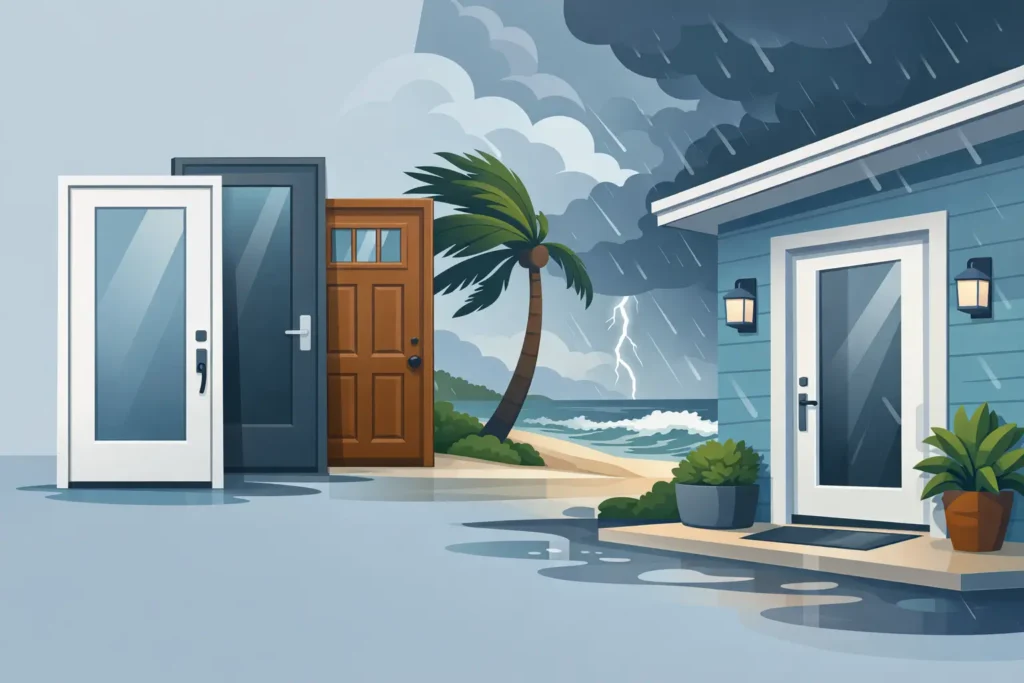
When hurricane season turns from a forecast into a named storm, your exterior doors become part of your home’s first line of defense. The best exterior doors for storms are not simply heavy doors with strong locks. They are tested, approved, properly anchored systems designed to resist wind pressure, flying debris, and wind-driven rain common across Broward, Miami-Dade, and Palm Beach counties.
For South Florida homeowners, choosing a storm-ready door is about more than passing an inspection. It can help protect your family, limit expensive water damage, preserve your roof and wall system, improve energy efficiency, and support the long-term value of your property. The right choice depends on your opening, home style, local code requirements, and whether you need a single entry door, French doors, or a large glass patio opening.
What Makes an Exterior Door Storm-Ready?
A hurricane-rated door is a complete assembly. That includes the door panel, glass, frame, hinges, locks, weatherstripping, anchors, and installation method. A high-quality door slab installed in a weak frame or fastened incorrectly can still fail under storm pressure.
In a major wind event, a door must handle two different forces. First, it must resist extreme wind pressure pushing and pulling on the opening. Second, in many South Florida locations, it must withstand impact from windborne debris. If debris breaks a window or glass door, wind can enter the home and create internal pressure. That pressure can contribute to roof damage, wall failure, and major losses throughout the house.
Look for doors with the appropriate Florida Product Approval or Miami-Dade Notice of Acceptance when required for your property and location. These approvals matter because they verify that a specific product configuration has been tested for the conditions it is intended to handle. The glass type, frame, hardware, size, and installation details must match the approved system.
The Best Exterior Doors for Storms: Your Main Options
Impact-Rated Fiberglass Entry Doors
For many South Florida homes, impact-rated fiberglass entry doors offer the strongest balance of storm protection, appearance, maintenance, and energy performance. Fiberglass does not rust like steel, will not rot like wood, and can hold up well against intense heat, humidity, and salt air when properly finished and maintained.
These doors are available in solid panels or decorative glass designs. If you want natural light at the front entry, choose impact-rated glass that is part of the approved door system, not an aftermarket insert. Laminated impact glass is built to crack without allowing a large opening to form, helping keep the building envelope intact during a storm.
Fiberglass can also mimic stained or painted wood without the ongoing maintenance that real wood requires. That makes it a practical option for homeowners who want curb appeal without sacrificing protection.
Impact-Rated Steel Entry Doors
Steel doors can be an excellent choice for homeowners who prioritize strength, security, and value. A properly rated and installed steel door is highly resistant to forced entry and can perform well in a storm-rated assembly. It is often a smart fit for garage-to-home entries, side doors, utility rooms, and rental properties where durability is a major concern.
The trade-off is maintenance. In South Florida’s humid, coastal environment, damaged paint or exposed metal can lead to corrosion over time. A steel door needs a quality finish and periodic inspection, especially in areas close to the ocean. It can also dent more easily than fiberglass, although a dent does not automatically mean the door has lost its protective value.
Impact-Rated Glass Doors and French Doors
Large glass openings bring in Florida sunshine, backyard views, and a more open feel. They also demand careful product selection. Impact-rated French doors and hinged glass doors can provide the look homeowners want while meeting strict wind and impact requirements.
The key is to evaluate the entire configuration. Multi-panel doors, sidelights, transoms, outswing doors, and wide openings may have different approval requirements and design pressure limits than a standard single entry door. Decorative grids and glass styles should also be selected within the manufacturer’s tested system.
For a home exposed to open water, a canal, or a wide backyard with little windbreak, do not assume a basic impact rating is enough. The door needs to be suitable for the specific pressure zone and opening size. A professional measurement and product review can prevent costly mistakes before installation begins.
Impact-Rated Sliding Glass Doors
Sliding glass doors are a popular choice for patios, pool areas, and lanai access, but they are among the largest openings in many homes. A storm-rated slider needs reinforced frames, laminated impact glass, high-quality rollers, interlocks, tracks, and secure locking hardware. It also needs drainage features that help manage heavy, wind-driven rain.
A sliding door can be a great option when space is limited because it does not swing into a room or onto a patio. However, large panels can cost more, and lower-quality rollers or tracks can become frustrating over time. Choosing a system built for daily use as well as storm protection is worth the investment.
Do Not Overlook the Frame, Threshold, and Hardware
Homeowners often focus on the visible door panel, but the supporting components do much of the hard work. The frame must be strong enough to resist flexing and securely fastened into the structure. The threshold needs to control water while allowing the door to operate properly. Weatherstripping must create a dependable seal without making the door difficult to close.
Hinges and locks are equally important. Exterior doors should use hardware approved for the door system, with enough locking points and structural reinforcement to handle pressure during a storm. For double doors, pay special attention to the active and inactive panels, astragal, flush bolts, and sill connection. A beautiful set of French doors is only as dependable as its weakest connection.
This is why a lower price on a door alone is not always a lower project cost. If the product is not rated for your opening, requires extensive modifications, or is installed without the proper fasteners and sealing, the savings can disappear quickly.
How to Choose the Right Door for Your Home
Start with the opening’s purpose. A front entry door should balance protection, security, insulation, and curb appeal. A side door may call for a simpler steel or fiberglass option. Patio and pool openings often benefit from impact-rated sliding or hinged glass systems that preserve light and access.
Next, consider your exposure. Homes near the coast, on open lots, in high-rise buildings, or near large bodies of water may face higher wind pressures. The location of the door on the home also matters. A sheltered rear entry does not always require the same solution as a front-facing opening exposed to prevailing winds, but every exterior opening should be evaluated under applicable building requirements.
Finally, think about the full project. Replacing doors at the same time as impact windows can create a more consistent protective envelope, improve the appearance of the home, and simplify installation planning. Pairing those upgrades with roofing or solar work may also help homeowners coordinate financing and avoid repeated disruption later.
Installation Is Part of the Protection
Even the best-rated door cannot perform as intended if it is installed poorly. Accurate measurements, proper substrate preparation, approved anchors, shims, sealants, flashing details, and final adjustments all affect performance. A door that binds, has uneven gaps, or allows water at the sill should be corrected before the next storm puts it to the test.
Work with a contractor who understands South Florida permitting, product approvals, local inspection requirements, and the difference between a standard replacement and an impact-rated installation. Hurricane Heroes helps homeowners plan these upgrades as a complete protection project, with doors selected and installed for the home rather than pulled from a one-size-fits-all shelf.
Ask for clear information about the selected product, its approval documentation, expected timeline, warranty coverage, and the condition of the existing opening. A trustworthy installer should be able to explain why a specific door is recommended and what preparation is needed before work begins.
Protection That Looks Like It Belongs on Your Home
Storm protection does not have to make your home feel industrial or closed off. Today’s impact-rated exterior doors come in clean contemporary styles, traditional panels, wood-look finishes, privacy glass, decorative glass, and configurations that suit everything from coastal cottages to modern South Florida residences.
The best choice is the one that meets the required performance standards, fits your home’s exposure, and gives you confidence when the weather changes. Before the next storm watch is issued, take a close look at the doors you rely on every day. A properly selected and installed impact-rated door gives your home one less vulnerable point and gives your family more peace of mind.