


 Español
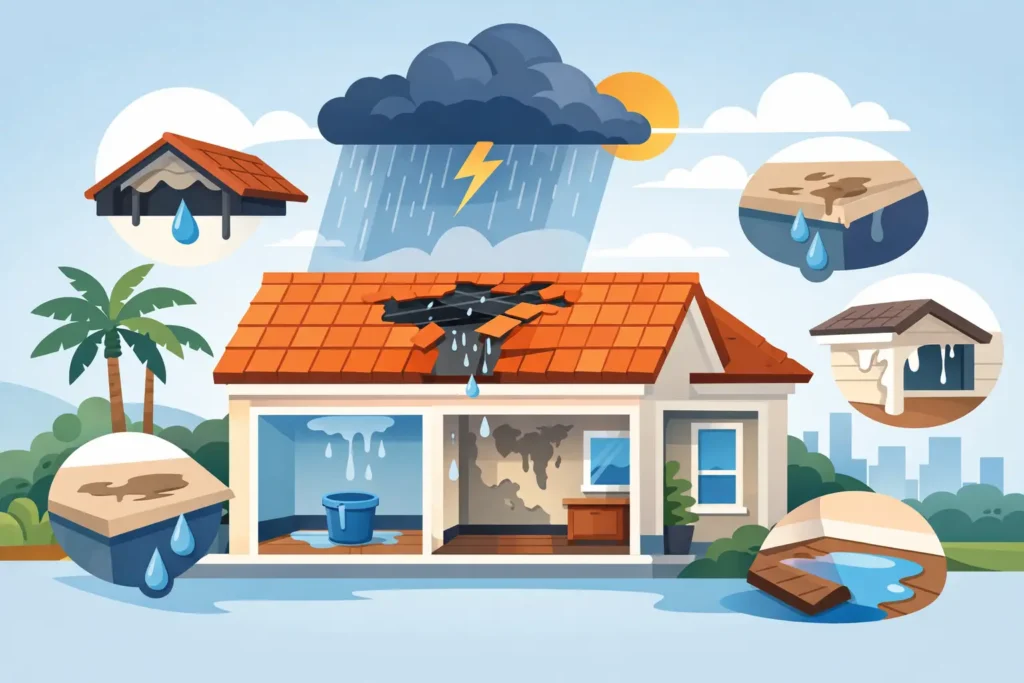
A brown ring on the ceiling after a hard South Florida rainstorm is not just a cosmetic problem. It is often one of the clearest signs of roof leak damage, and waiting to see whether it gets worse can allow moisture to spread through insulation, framing, and drywall. In a region where intense sun, wind-driven rain, and hurricane season put roofs under constant pressure, a small leak deserves quick attention.
The good news is that roof damage often gives homeowners warnings before it turns into a major interior repair. Knowing what to look for can help you protect your home, your belongings, and the investment you have made in your property.
10 Signs of Roof Leak Damage to Watch For
1. Ceiling stains that grow or change color
Water stains may start as a faint yellow or tan circle, then become darker after each rain event. A stain can appear far from the actual roof opening because water travels along rafters or drywall before it drips. If the mark expands, feels damp, or returns after you paint over it, the moisture source has not been resolved.
Do not assume a stain is old simply because it is dry on a sunny day. Florida roofs can leak only during heavy, wind-driven rain, making the problem easy to miss between storms.
2. Bubbling paint or peeling drywall
Paint that bubbles, cracks, or peels near the ceiling is often reacting to moisture behind the surface. Drywall may also soften, sag, or develop a swollen texture. This is especially common around exterior walls, skylights, vents, and areas below roof valleys.
A little peeling paint can also result from indoor humidity, so location matters. When the damage is concentrated near the top of a wall or gets worse after rainfall, a roof or flashing issue becomes much more likely.
3. A musty smell in a room, closet, or attic
You may smell a roof leak before you see one. A damp, musty odor can mean moisture has reached insulation, wood framing, or drywall where it cannot easily dry. Closets, spare rooms, and attic spaces are common places for these odors to build up because airflow is limited.
Ignoring the smell can create a larger cleanup job later. Moist materials can support mold growth, and mold concerns are especially important for families, retirees, tenants, and anyone with respiratory sensitivities.
4. Visible mold or mildew near the ceiling
Small dark spots on ceilings, upper walls, or around air vents should be taken seriously. Mold does not automatically prove a roof leak, since air-conditioning condensation and plumbing leaks can also cause it. Still, if the growth appears after a storm or near a roof penetration, it is a reason to investigate promptly.
Cleaning the visible area without correcting the moisture problem only treats the symptom. The source needs to be identified so the affected materials can dry and the damage does not return.
5. Water dripping during or after rain
An active drip is the most urgent warning sign. Place a container beneath the water if it is safe to do so, move electronics and valuables out of the area, and avoid climbing onto a wet roof. If water is near lighting, outlets, or electrical equipment, turn off power to that area only if you can do so safely and contact a qualified professional.
Take photos and note the date, weather conditions, and location of the leak. This documentation can be helpful when discussing repairs or reviewing potential insurance claims.
6. Damp attic insulation or wet roof decking
Your attic can reveal damage long before it becomes visible in the living space. On a dry day, look for damp insulation, dark wood, water trails on rafters, rusty nails, or daylight coming through areas where it should not. A flashlight is enough for a basic visual check, but avoid stepping on ceiling drywall or disturbing damaged insulation.
Wet insulation loses its ability to regulate indoor temperature efficiently. That can place more strain on your cooling system and contribute to higher energy bills during an already hot South Florida summer.
7. Cracked, curled, missing, or loose shingles
Exterior damage is one of the most obvious signs that water may find its way beneath the roof covering. Shingles that are cracked, curled at the edges, missing, or lifted by wind leave the layers below more exposed. Granules collecting in gutters or at downspouts can also indicate aging shingles.
Not every damaged shingle means the entire roof must be replaced. The right solution depends on the roof’s age, the extent of the damage, prior repairs, and whether the surrounding materials still have reliable life left. After major wind exposure, however, a professional assessment is often the safest way to understand the condition of the complete roofing system.
8. Damaged flashing around vents, chimneys, and valleys
Flashing is the metal material that helps direct water away from vulnerable roof transitions. When flashing is corroded, bent, improperly sealed, or pulled loose, water can enter around plumbing vents, chimneys, skylights, and roof valleys.
These trouble spots matter because they handle concentrated water flow. A roof may look fine from the ground while a failed seal around one vent allows repeated moisture intrusion during heavy rain.
9. Sagging rooflines or soft spots
A roofline should look straight and even. Any visible dip, sag, or wavy area deserves immediate attention, particularly if it appeared after a storm. It can indicate prolonged moisture damage to decking or structural components.
Inside the home, a ceiling that sags or feels soft is also a warning. Do not poke, press, or try to drain a bulging ceiling yourself. Water can be heavier than it looks, and damaged drywall may fail unexpectedly.
10. Higher cooling costs with no clear explanation
A sudden increase in energy use is not always caused by a roof leak, but it can be part of the picture. Water-damaged insulation, attic ventilation issues, and openings in the roof system can make it harder to keep conditioned air inside the home. If higher bills arrive alongside stains, odors, or shingle damage, it is worth looking at both your roof and attic.
For Florida homeowners, roof performance is about more than keeping rain out. A properly installed roofing system supports comfort, energy efficiency, and stronger protection during severe weather.
What to Do When You Notice Roof Leak Damage
Start by documenting what you can see from the ground and inside the home. Photograph stains, damaged ceilings, missing shingles visible from a safe location, and any water entering the property. Note whether the issue happened during steady rain, high winds, or after a named storm.
Next, limit additional damage. Move furniture, rugs, and valuables away from the affected area. Use containers for drips and towels to protect flooring. Avoid temporary repairs that require walking on the roof, especially after rain or when wind conditions are unsafe. A tarp may help in some emergency situations, but incorrect placement can cause more damage or create a safety hazard.
Then arrange for a qualified roofing professional to inspect the roof, attic, flashing, and drainage areas. The goal is not merely to stop the visible drip. It is to find the entry point, identify hidden moisture damage, and recommend a repair or replacement plan that fits the roof’s actual condition.
Why Fast Action Matters in South Florida
Heat and humidity make roof leaks more costly when they are left alone. Moisture can spread quickly through insulation and building materials, while frequent afternoon storms can repeatedly saturate the same weak area. Hurricane-force winds can also turn a minor roofing weakness into a larger opening when the next storm arrives.
Fast action may help preserve more of the existing structure and reduce the scope of interior repairs. It also gives you time to make a thoughtful decision rather than facing an emergency replacement in the middle of storm season.
If your roof is older, has been repaired several times, or shows storm-related wear across multiple areas, a replacement may offer better long-term value than repeated patchwork. Modern roofing systems can be selected with durability, wind resistance, energy performance, and your home’s overall protection plan in mind. Hurricane Heroes helps South Florida homeowners evaluate roofing concerns and plan resilient upgrades with practical financing guidance when appropriate.
A roof leak rarely fixes itself, and the first stain is often the most affordable moment to respond. Pay attention to what your home is telling you, act before the next heavy rain, and give your property the protection it needs to stand strong season after season.